
Wadi Al kahl
New uploads
In the rocks of Al-Kahl lie the remnants of an ancient night frozen upon the mountains, and the ravines flow from the eternity of the slopes in long silence. In the valley, the acacia and tamarisk trees stand like guardians who know the secret of thirst and the sorrow of waiting. There, beneath the high cliffs, the stone becomes a memory of the wind’s names. There, the higher the path ascends toward Kharmat Busutin, the narrower the passage becomes until it seems like a fissure left by the earth to guide strangers toward the hidden directions. As for the valley, it remains stretched between shadow and fire, as if it were a volcanic trace still breathing beneath the dust of ash.
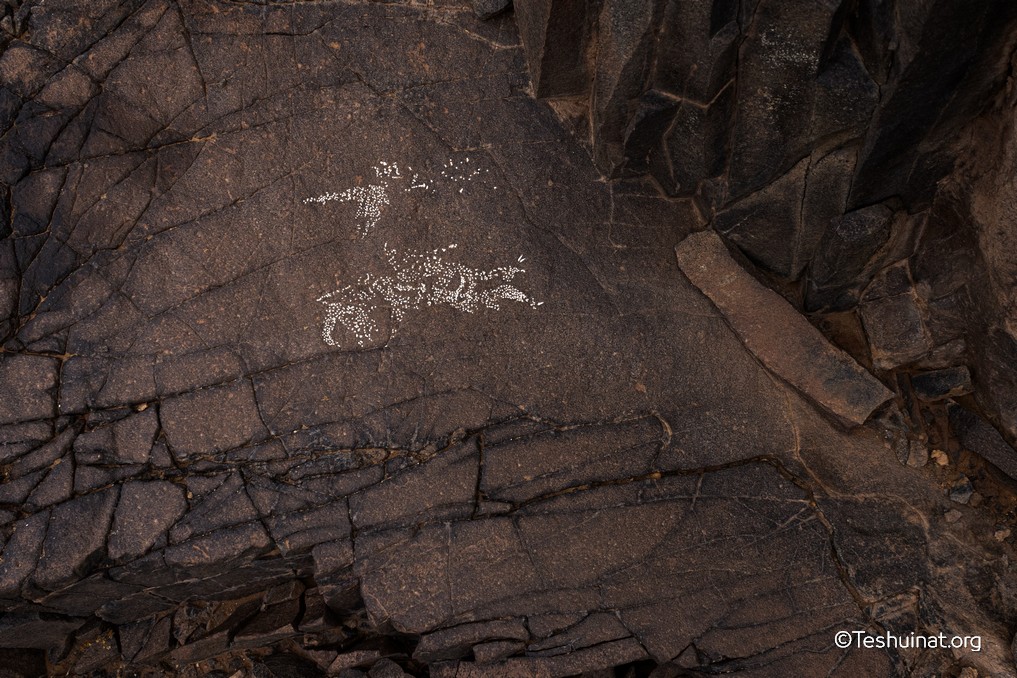
some of the rock art in Al kahl




pictures of the site


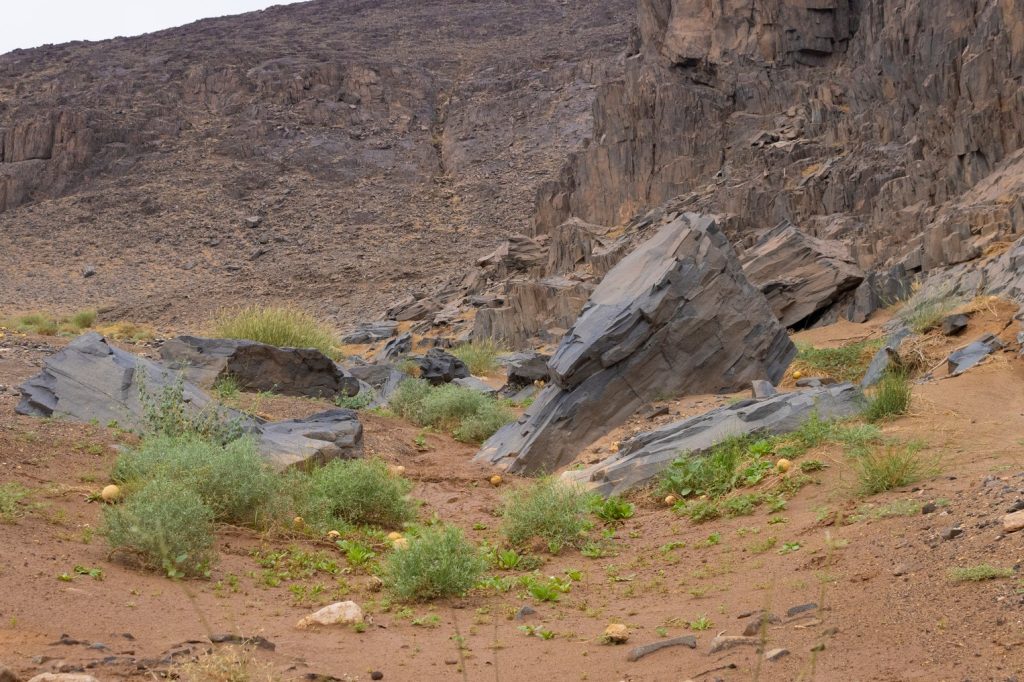

Wadi Al-Kahl is located on the northwestern side of the Black Mountains (Jabal al-Sawda’), approximately 80 kilometers from Suknah. This site is not limited to a single valley alone, but rather consists of a group of mountain passes and small valleys that connect to Wadi Zamzam, which extends for nearly one hundred kilometers. These passes are among its most significant natural tributaries, stretching between the formations of the Black Mountains.
The region is characterized by its volcanic nature, with black rocks resulting from ancient volcanic activity prevailing throughout the area. The mountains surrounding the valley rise to over one hundred meters, forming rugged and intertwined terrains that give the place a distinctive character. Among these rocks grow acacia and tamarix trees, which are among the most prominent desert plants capable of adapting to the arid environment, bestowing upon the valley a touch of life and shade amidst the harsh rocky landscape.
Upon venturing deeper into the valley and ascending toward its higher parts, a narrow mountain pass known locally as “Al-Kharmah” emerges. This is a natural corridor connecting Wadi Al-Kahl to the valleys and passes lying beyond it. This pass is considered one of the ancient routes known to the people of the region, as it leads to several neighboring valleys, the most famous of which is Wadi Asaylah. This pass is specifically known as “Kharmat Busutin” , a name commonly used among the local inhabitants and those familiar with the area’s ancient mountain trails.