
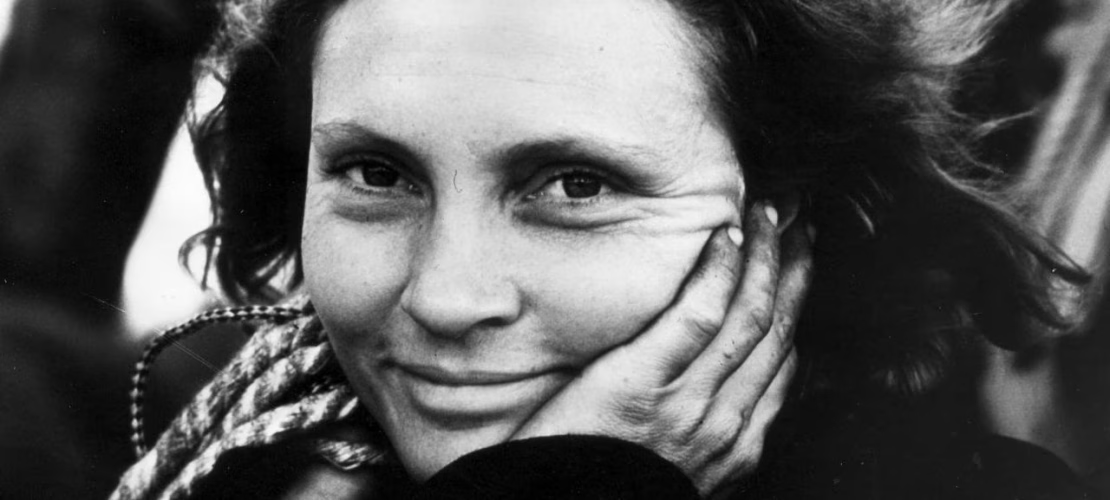
Tracks Film: The Journey as Deterritorialization[1]
Article: geopoetic, Hamza alfallah
*“When people ask me why I decided to do it, I usually answer: Why not?” *
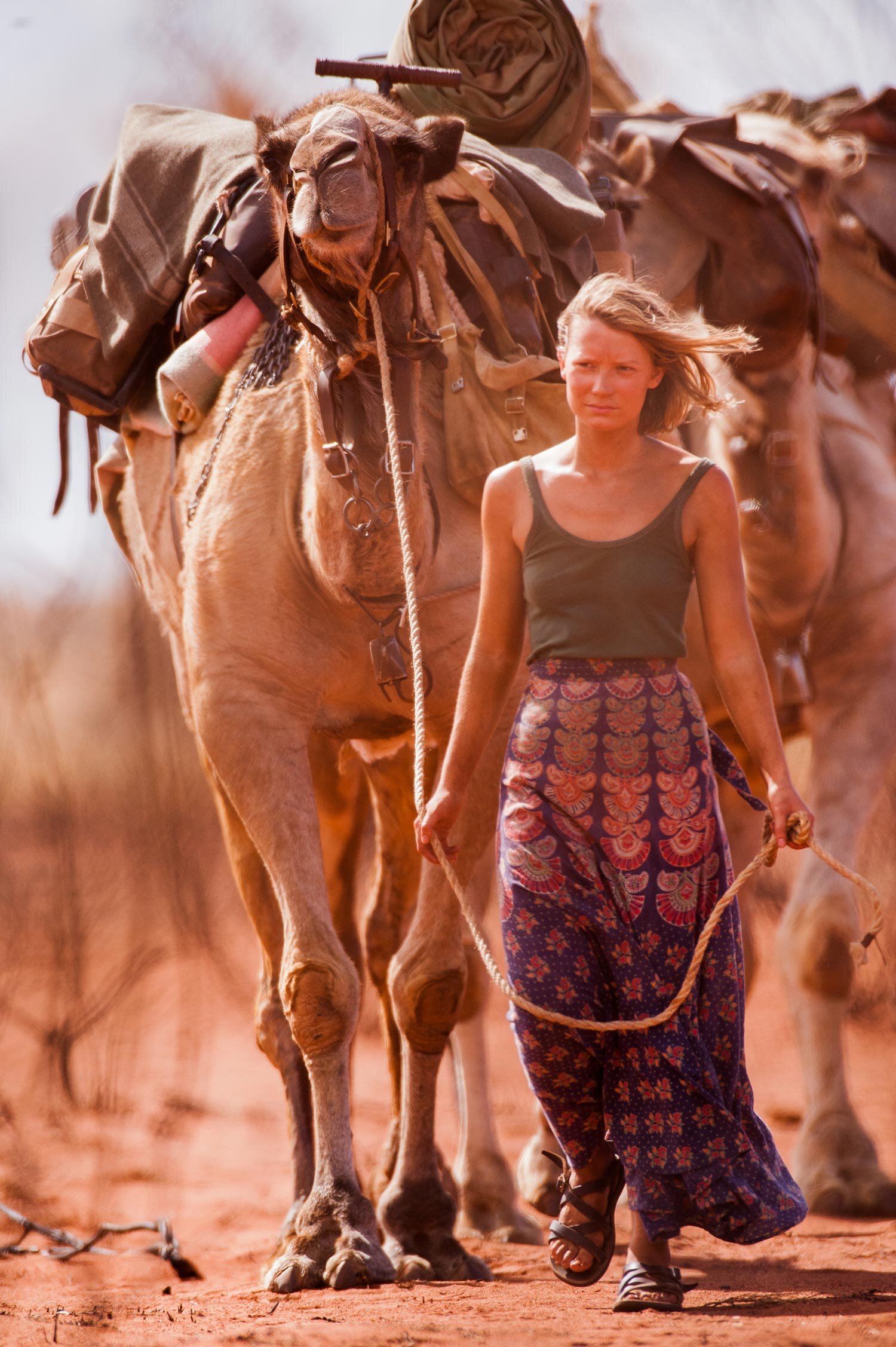
The journey is nothing but this answer—the answer of free will and the inclination towards difference. What was distinctive about Robyn Davidson’s[2] experience was that she wanted to tell the land: I am your child. A year earlier, the traveler Robyn had arrived in Alice Springs to plan a solo trek across the Australian desert from that town to the Indian Ocean, an estimated distance of 2,000 miles. A backpack, another bag she carried through the streets, and an obedient dog smelling the desire to shed the feeling of loss. Is there anything that rivals the pleasure of shattering the fixed image of helplessness when one stands before those they know and simply tells them that all they think about is leaving? And because breaking free from the gloom of this image is no easy feat, people’s gazes towards the audacity of her idea—between astonishment and disapproval—pursued her like a cursed witch flying at night on a broomstick to forbidden lands, or like a desperate girl wishing to awaken the final form of death by sleeping in ruins and dilapidated houses, and pursuing wild camel herds in central Australia to catch some and train them to carry her luggage.
Between two inseparable times, Robyn lives her own time—the time of living experience and contemplative immersions in the past, which she retrieves time and again, not as a completed time she returns to with full consciousness, but like a water ritual manifesting to the observer through an involuntary memory summoning what she traversed without living it with clear awareness—the faint sound of childhood, running while playing, and glances of sadness from windows in empty courtyards. This past moving in the unconscious does not remain static but transforms into creative material reshaped within the present, which does not constitute an independent temporal moment but rather a space for reactivation and interweaving in order to find alternative paths that do not know the fear of committing to the friendship of solitude throughout the journey.
Returning to the disappointment of searching for a simple job to secure a little money, and moving heavy luggage from place to place, not finding camels quickly was disappointing for Robyn. The feeling of need represented nothing but the chains of the world she had left to escape its narrowness. Staying longer meant only appearing before the daily failure stick, ready to reach out and strike her fingers. This is what drove her to find someone who could give her the necessary knowledge to manage three camels—fierce, hard to handle, and not easily trusting strangers. That happened after her companions gathered around her in a roofless house to bid her farewell, amidst a boisterous atmosphere of celebration—a gloomy climate from which she had become completely detached. The feeling of thirst in her reverie throughout that night represented nothing but an abundance of upheaval against her old world, due to the deepening of the land within her. This feeling was what countered territorialization and settlement, by deterritorializing, dismantling the system of rigid relationships and ideas, and the trivial positioning of small desires in her friends’ eyes. For nomadism alone is this deterritorialization, which does not mean going out into the void but rather signifies the spark of complete liberation from all these constraints imposed by territorialization, by deconstructing and reconstructing its relationships in different contexts to reshape itself anew.
In a vast expanse of silence pressing on hearing like heavy air, the journey begins with the sun rising, turning the sand into a huge mirror reflecting a glare that almost melts the shadows. In every scene, the dry elements of the natural landscape—trees, rocky masses, dead dunes—gather with an intensity of harshness, not as a passing event but as a constant climate throughout the nomadism, until the light recedes like the final hymn of raindrops. In this climate, the oral narratives of local indigenous cultures about the origin of things in this world are formed. For desertification, as James Frazer tells us, could only have happened through the theft of the fire contested since time immemorial from the water rats and fish—the first fire they kept away from human hands in an open place among groups of reeds on the Murray River—before the falcon discovered them on their way to roasting shellfish. And because secrets may not die, they could not stop him from soaring high to blow and stir a whirlwind among the dry reeds, causing fires to spread in every direction, and the blaze extending to the forest, which turned into a desert where not a single tree has grown since that day.
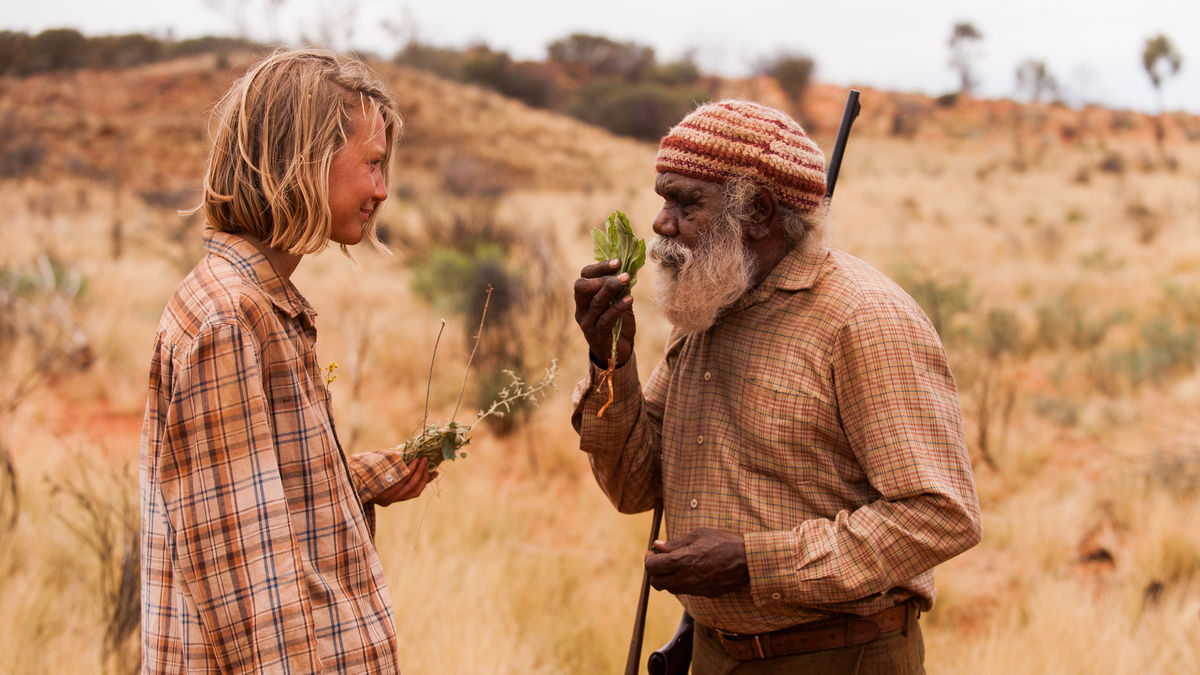
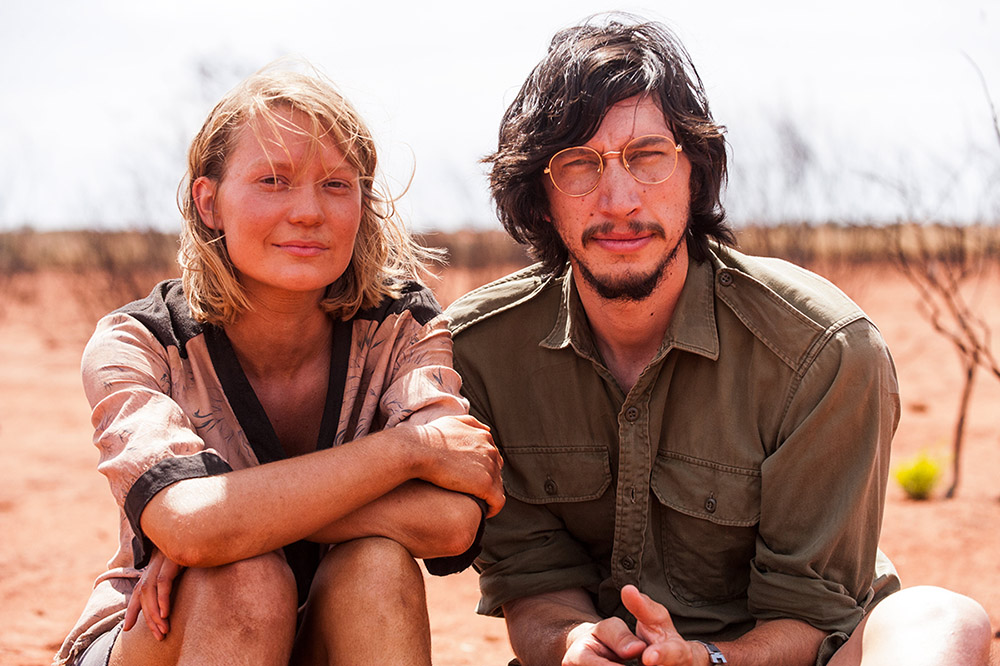
Amidst this magic, the adventurer Robyn Davidson was cutting her path after Eddie, an Aboriginal man, joined to accompany her. The silence between them was not a void but an inability of language to speak. Yet the symbolic expression of his culture manifested in his slow walk ahead of the camels, with a tired body, dusty beard, and shabby appearance expressing the sorrow of alienation in his dispossessed land, like an old boat in the belly of violent winds uprooting stillness with the sword of sandstorms across the horizon. The absence of people during Robyn’s nomadism in the desert wilderness before he joined her meant nothing but the absence of the original reference to the place and its expanse, represented by his presence overflowing with the astonishing mysteries of Australian nature, rituals, and taboos—such as the prohibition on women hunting game, choosing the most suitable and shortest routes, and avoiding forbidden areas.
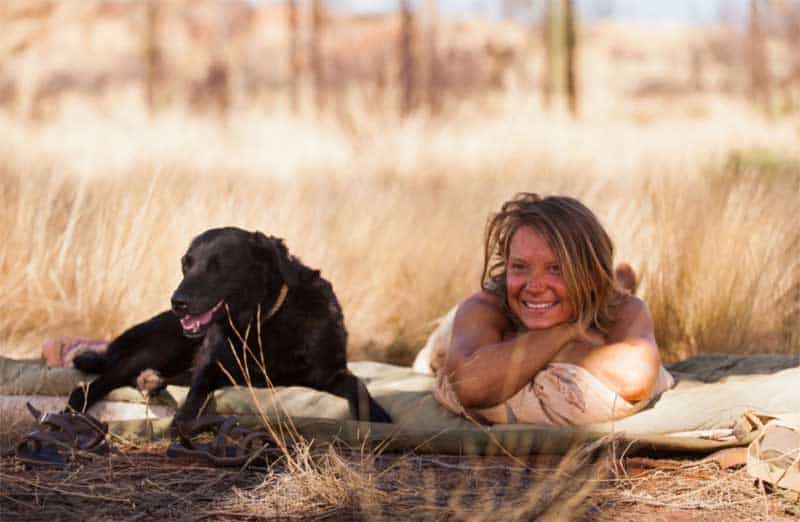
Water remained a fragile probability, and the risks of its absence increased after Robyn decided to continue her path from the sacred land, after they arrived there, without a companion. At this scene, relative territorialization in the Deleuzian intellectual context ends, and a different state of absolute deterritorialization begins, taking the form of a more robust and dynamic movement, representing a transition to a higher level of solitude and freedom. This deterritorialization must be accompanied by some loss due to attachment, especially after the death of her dog Diggity upon ingesting poisonous waste from the ground at night. It is at this precise point that the traveler enters the infinite task of absence, when it presents itself as something she cannot verify its completion, as the scenes grow drier. Robyn sheds everything that makes her feel uncomfortable and walks naked for long distances, following the water gallon drops left by photographer Rick Smolan, moving away from the intrusion of photographers who were chasing her.
At night, she would easily light a fire in the cold, now that ordinary humans like her, thanks to the karigari,[ 3] had come to possess it. She would bed down on the earth and not think of tomorrow, but of the great pine tree reaching to the sky[4]—the tree that men, women, and children once climbed long ago before it was consumed by the desert’s drought fires. Robyn would gaze at all those humans who could not descend again, adorned with types of glass they placed on their heads, necks, elbows, knees, and other folds of their bodies, observing the sparkle of their glass ornaments while thinking of the inexhaustible desert night and all the silver lights she saw in the eyes of the Mara ancestors who had transformed into stars.
[1]: **Land, Territorialization, and Deterritorialization:** In the thought of Gilles Deleuze and Félix Guattari, the **earth** constitutes a dynamic field of energies and relationships, not merely a geographical space but a field of intellectual and existential becoming. **Territorialization** is the process of forming territory or temporary stabilization within this field, where relationships and meanings are regulated. In contrast, **deterritorialization** represents the movement that disturbs this stability, dissolving boundaries and opening the field for reshaping relationships and identities, reflecting a perpetual becoming between stabilization and liberation, between dwelling and journeying. (Deleuze & Guattari, *A Thousand Plateaus*, 1980.)
[2]: **Robyn Davidson:** Australian traveler and writer nicknamed the “Camel Lady.” She became famous for her epic solo journey in 1977, crossing 2,000 miles across the arid Australian deserts from Alice Springs to the Indian Ocean. She was portrayed by Australian actress Mia Wasikowska in the film adaptation.
[3]: Falcon.
[4]: A widespread oral narrative in ancient Australian stories.

Hamza alfallah
Writer and researcher
Share now: