Series: The OA
The Shamanic Worlds of Immortality
Article: shamanisim, Hamza alfallah
In every story, there is a longing for a veiled time, for a promised land that proposes only pain as a condition for our acceptance, and for an obscure idea that sees in immortality the discovery of meaning. In the shamanic worlds, life and death dance in a single circle, and the river of the body flows through visions into a space where the gates of stars open their handles, allowing the soul to listen to the secret of wonder hidden in the movement of overlapping dimensions, from the clash of inner and outer.
In the shaman’s world, there is an ancient tradition of expressing human sorrow and the tragedy of the lost within the text—this shaman who left us in Libyan rock art the narrative of passage through his temporary death and his symbolic text open at the crossroads in the engravings of the Libyan desert. This text, not lacking in imagination, was a dream of eternity, of nature healing from drought. And this pure dream is what we have called the “Libyan Rain Religion” in the civilization of the central desert. But who is this shaman? And what message does the shamanic ecstasy wish to convey to the world today?
According to the cultural framework and symbolic legitimacy of these worlds, the shaman is inseparable from the internal system of his society, which is subject to a complete structure of entrenched beliefs and binding social laws for his function. This function plays a pivotal role in saving the life of the group, yet at the same time, he does not represent the hero figure of the traditional narrative. Rather, he represents what is imposed by the conditions of his social upbringing and the characteristics that distinguish him from other individuals. This nourishes the sanctity of his experience in cultural renewal and knowledge transfer to his partners as a mediator of spiritual efficacy through rituals, songs, and structured bodily movements.
The Libyan shaman has what distinguishes the scenery of his passage within the specific cultural context in the invisible scene at many prehistoric Libyan rock art sites. Perhaps this is what shamanism wishes to convey to our material world today: healing us from selfishness by sharing spiritual pain. What underpins the emotional logic of the shaman as a healer is social solidarity—this value we have lost due to the monopolistic modern world that produces individualistic values. Perhaps this message is the most sublime through a return to contemplating the values of shamanic society and employing its symbolic connotations in contemporary arts.
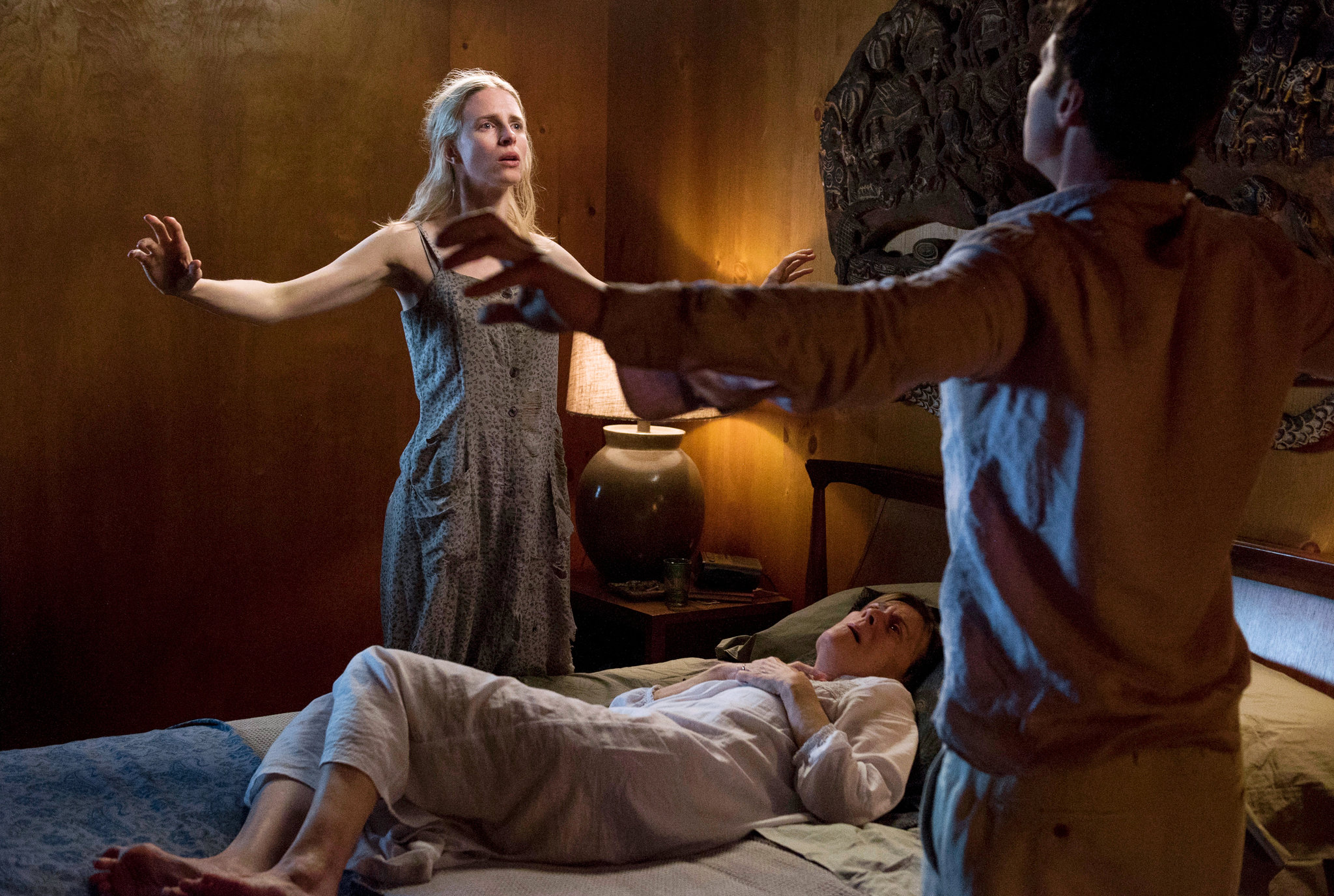
For in this return, there is something of the aesthetics of the magic of madness that Gilles Deleuze spoke of, saying: “The real magic of a person is the side where they lose control a little; it is the side where they no longer really know where they are. This doesn’t mean they collapse; on the contrary, these are people who do not collapse. But if you cannot understand the root or seed of madness in someone, you cannot truly admire them… you cannot truly love them.” And Gilles Deleuze, with this philosophy, easily leads us to find the magic of this uncanny madness in the character of Prairie Johnson, portrayed by actress Brit Marling in the series The OA.
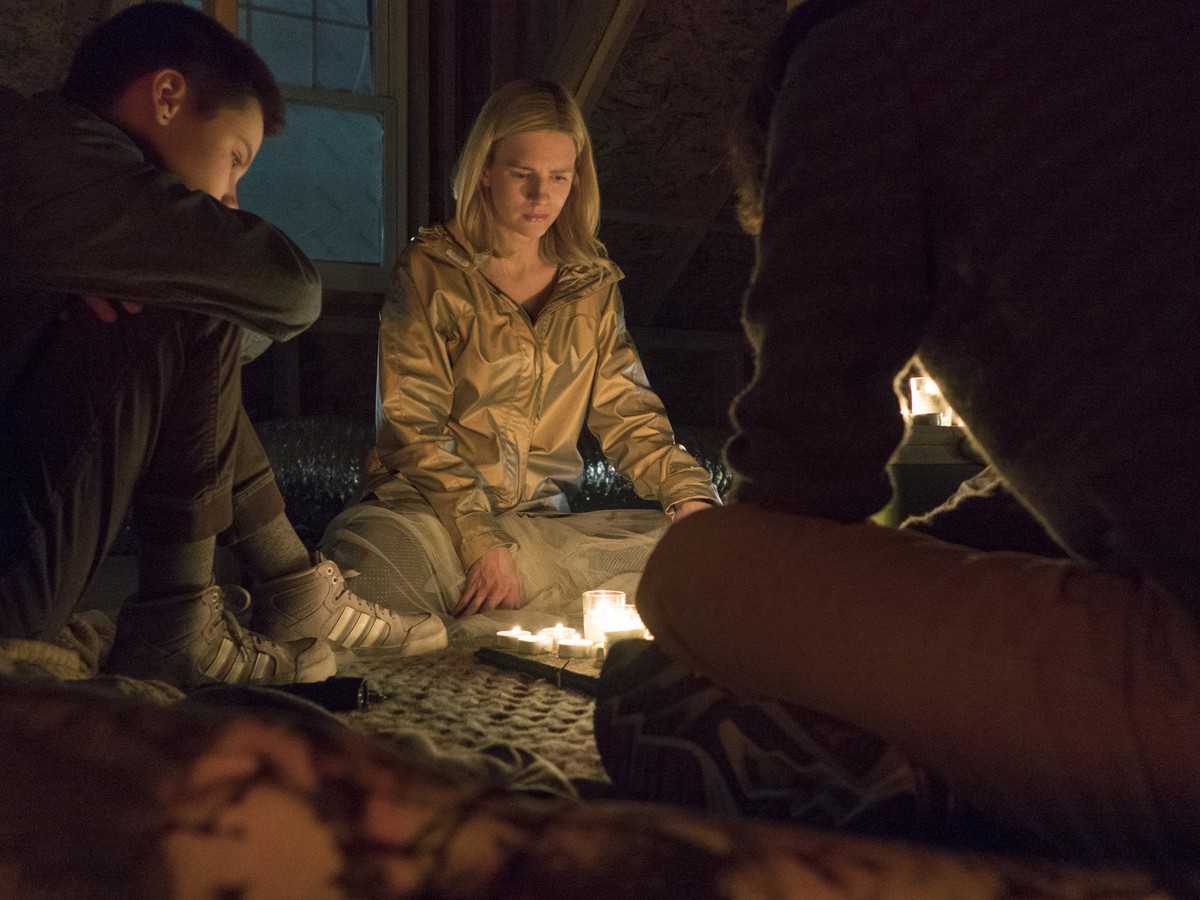
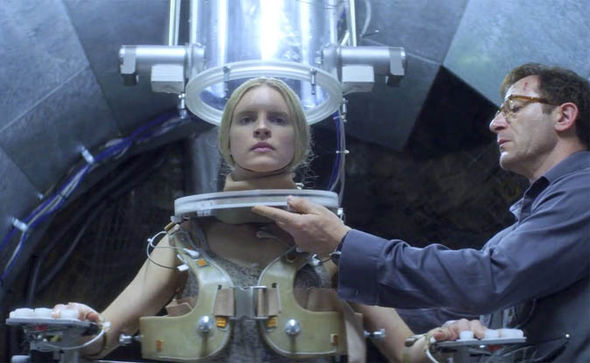
This work was first aired in 2016 and then in 2019. It is one of the series categorized under mystery, drama, and science fiction. In this work, narration acts as an act of creation to move through several dimensions—some material, symbolic, and psychological all at once. But this is not what distinguishes the plot; what is truly exceptional is its foundation on solid ground of knowledge about shamanic culture and the spiritual dimension as the basis for the shaman’s work. These are the main themes: near-death experiences, which correspond to altered states of consciousness in the shamanic dimension; the pursuit of finding parallel worlds and the possibility of experiencing them sensorially and physically; and the community of shared calling formed by members of a single destiny. These foundations are not the only ones, but they are the main structure for the characters’ movement within the work’s space.
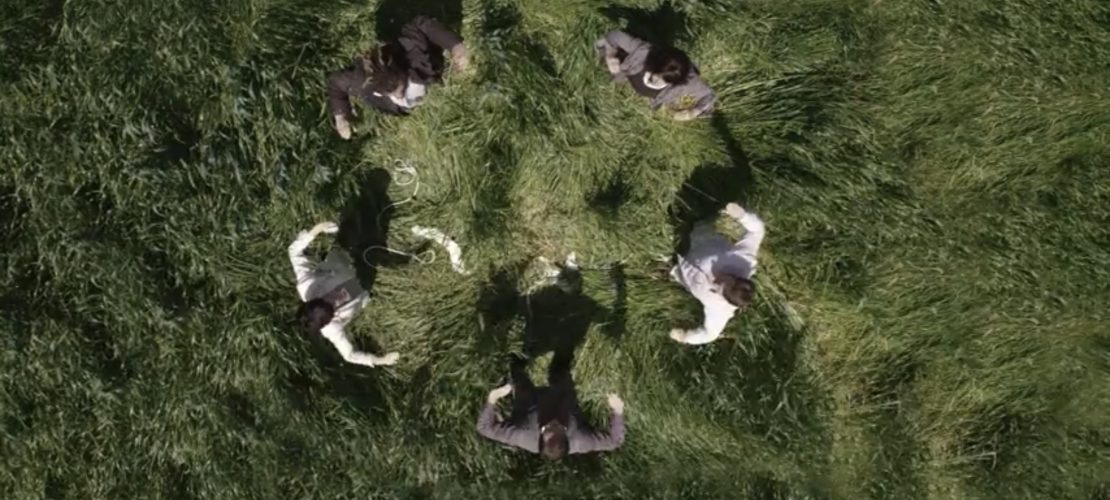
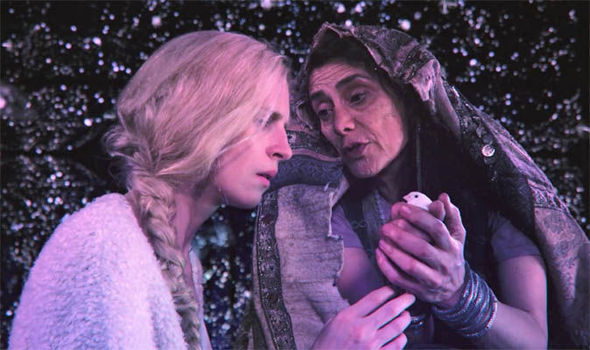
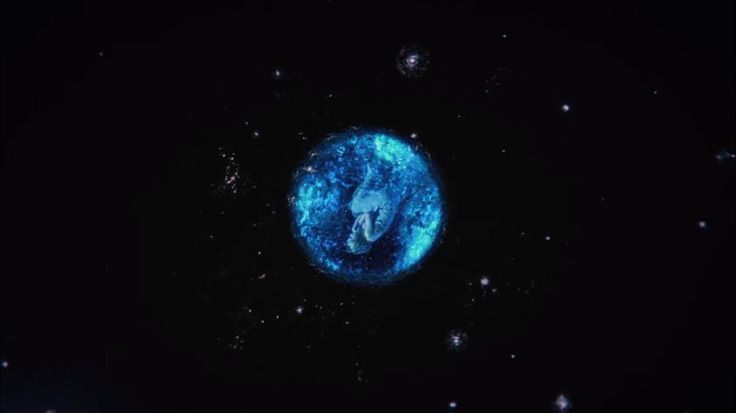
Furthermore, this work is based on the concept of traditional shamanic experience, the philosophical ground where existence, consciousness, and narrative intersect. This gives epistemic credibility to a viewer familiar with ethnographic shamanic studies, which are far from the modern practitioner’s experience of reaching this kind of spiritual dimension. This epistemic credibility of the work is embodied in the portrayal of the protector or spiritual helper in the character “Khatun” by actress Hiam Abbass, the appearance of the water “Qultah” or passage portal, recurring episodes of nosebleeds, the community of shared destiny—both in the narrative dimension and the imagined parallel dimension inside the glass box—and the five movements that show that embodied knowledge, when practiced collectively, is capable of shaping reality in order to re-form it.
I must not miss noting here that the fundamental difference in the spiritual dimension of both experiences is that the shaman operates within a broad cultural and belief system that assumes a central, shared social role, whereas the practitioner suffers from the absence of a unified communal ritual structure, making it an individual curiosity that affects the meaning and ethical responsibility of shamanic thought.
This contemporary shamanic narrative structure is unique in that it integrates the shock of near-death—the liminal zone for the traditional shaman between the material and the spiritual—with multi-layered narration, which perfectly suits the shaman’s journey through a tunnel that pulls in successive events and rapid transition, and the bodily-aware ritual movement to reach an altered state of consciousness based on dance as ritual.
Thus, shamanic traditions and the role of the shaman, whether in the engravings of the Libyan desert at many prehistoric Libyan rock art sites in the Black Mountains, Tadrart Acacus, Al-Masak, and Jebel Ben Ghanimah, or in the narrative structure of the series The OA, are not merely a trace of ancient imagination. Rather, they are an invocation of a spiritual necessity we have lost in the modern world. The shaman does not offer individual healing but mends the rift between humans and their world, between body and consciousness, and between life and its possibilities which are hidden from us under the weight of harsh rationality.
In a time of escalating excessive individualism, isolation, and fading common bonds between individuals, the shamanic experience returns to remind us that meaning is not born from the centrality of the self, but from shared destiny and the ability to participate in pain, knowledge, and healing. And perhaps this is what makes this series a work that transcends artistic imagination to become a contemporary attempt to resurrect an ancient wisdom: that humans do not heal alone, and that the world is not reshaped except when body and consciousness move together within a collective emotion that acts as a ritual against loneliness, as if we are all searching for a small gate that opens for us the path of return—to escape to our primordial selves.


Hamza Alfallah
Writer and researcher
Share now: