
The Horizontal Wandering of Knowledge
For a Local Ethnography
Article, Ethnography| Hamza alfallah
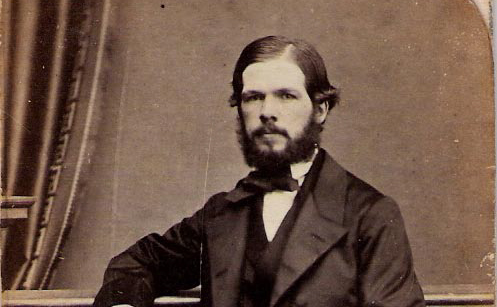
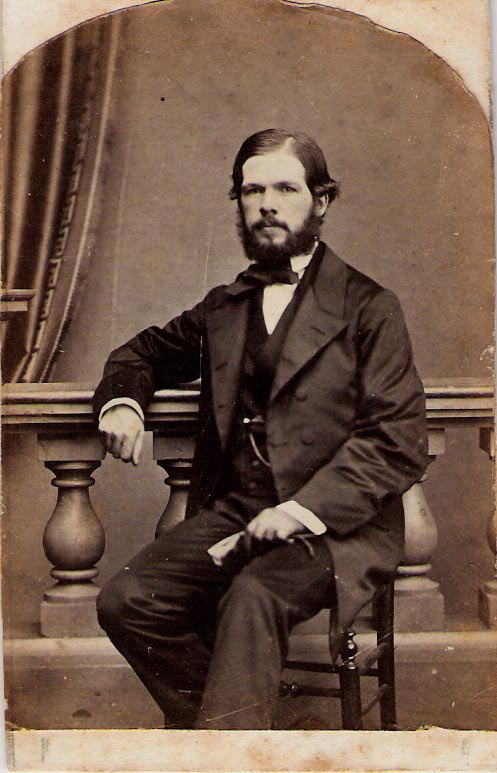
In the land of the tale traversed by his weary and dreaming steps, the ethnographer is perpetually fascinated by the promise of the traveler in the unknown lands beyond the distant mirage that shimmers in his eyes amidst the remote regions of thirst, where no water can save him except the water of imagination. Ethnographic practice is the liminality of standing between multiple worlds, granting him diverse layers of subjective visions through the study of facts. At this level, the field experience becomes worthy of contemplation; undoubtedly, the ethnographer’s expertise intersects with what he sees and hears. This field experience allows him to understand the dynamics of transitioning from direct documentation of narratives to reflecting on their social function and role in interpreting the studied culture. Through this mechanism, he moves beyond recording material to a deeper analytical practice that defines his position as a researcher and balances the internal multiplicity between his voice and the voice of the community members without absence or monopoly, whenever he tries to advance to quench his thirst—this sad thirst that concerns not only him, but also what he sees reflected in the eyes of the narrators surrounding him as they recount their traditions and personal experiences with the voice of wisdom, sing with excessive intimacy sometimes, and perhaps dance to explain a ritual mural in one of the caves their ancestors inhabited. In Cape Town, inside a house that sheltered some prisoners of the Cape Colony, Wilhelm Bleek[^1] suffered from this thirst, chasing his personal mirage through diligent work documenting the stories of the San Bushmen in their original language, relying on a direct referential tongue that transcends the oral narration of all the tales he heard, to reach the deep meaning behind one of his informants sitting for long periods spontaneously telling him about his mother’s method of getting rid of the influence of bad dreams when leaving the house to fetch food, by burying a stone in the fire’s ash and calling out to the protective spirits so that the nightmares would not accompany her along the way.
However, the measures of ethnographic work, such as long-term residence, attentive listening, and close observation of informants, cannot fully rescue the researcher from the pitfalls of his subjectivity and reflexivity in his work. Bleek’s nineteenth-century experience—concerning Bushmen folklore, published in 1911 thanks to Lucy Lloyd’s efforts after his death in 1875—can be viewed such that reflexivity in his project remains at the level of language first, which can be considered an awareness of the linguistic horizon and the limitations of direct translation; hence the work was done to establish the texts in the original language before their translation. Second: the centrality of the individual narrator, which involved working with characters who were not entirely unknown, who provided lengthy tales about their culture according to their position in the historical context, that is, a personal production of narrative by the primary narrators[^2]. Third: the almost explicit absence of the researcher’s position as an actor within a colonial system, and consequently the absence of deconstructing power between him and the narrators, which makes his work technically (linguistically) reflexive, not politically epistemological, assuming the complete dominance of European understanding over the text.
Thus, as we mentioned, his methodology relied on three dimensions: establishing the original text, then analyzing its linguistic structure and narrative forms, before producing a parallel translation of the raw material, in addition to the absence of the researcher’s position as a political actor, reflecting the limitation of dominance that led to controlling reflexivity by preserving the original stylistic characteristics of the experience. This procedural sequence gave the project a qualitative, interactive character, as it was founded on the priority of the original material and preserving its oral stylistic features. Such a procedure reduces the possibilities of reformulating the text according to a European horizon, regardless of the historical context in which this project was carried out, which later took on a critical documentary dimension due to its association with a language threatened with extinction.
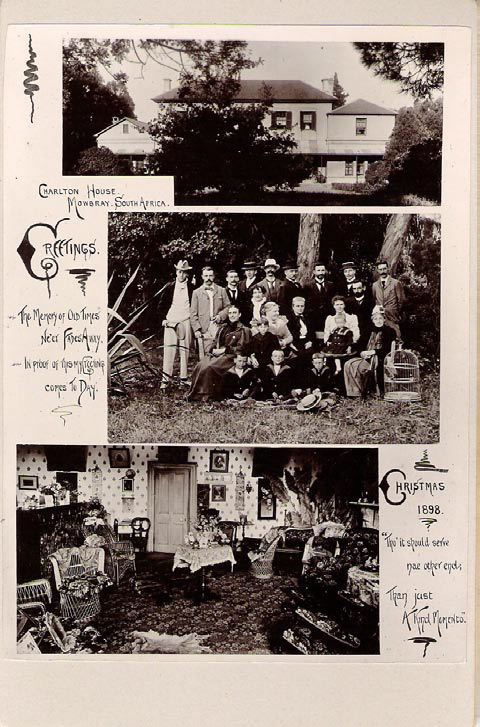
©Bleek-Lloyd Scott Family Archive Catalog 2007
Awareness of this type of ethnographic experience grants us ample space to understand the structure within which field work moves, and the dynamics of its transition from the narrow space of documenting these narratives to reflecting on their social function and what they address; that is, how tales and cultural symbols transform into analytical tools, and how these narrative materials can become a tool for interpreting the living system with all its emotional tension and duality combining symbolic themes of death and life, drought and water, and animal and human. These environmental and social symbols carry complex meanings that explain the relationship between humans and their surroundings. In many of the Bushmen tales collected in Bleek’s experience, there are explanations related to the symbolic meaning of their rock art, and this meaning addresses the idea of cosmic imbalance on the environmental level through their view of rain as a living being, and of drought not merely as an emergency climatic crisis, but as a serious disruption in their relationship with invisible forces; these forces whose communication with humans maintains their balance in dealing with the elements of nature.
Such procedures, of meticulous documentation of these tales and highlighting the voices of participants, enable interpretation within a specific socio-cultural context, and provide a practical model that we can employ in accordance with the Libyan environment, in the field of Libyan rock art, particularly concerning the culture of the rain religion in the central Sahara, and the murals produced by this culture that mirror the ethnographic reference in various sites in Southern Africa, within an interdisciplinary horizon where the balance between the authority of the author and the studied society becomes clear. For the ostrich in San Bushmen culture does not awaken from its resurrection after being slaughtered by the bushman except so that the small whirlwind occurs, and its feather flies to the sky and falls into the heart of the water, so its flesh grows anew and enlarges until it becomes taller and tougher, kicking with its feet and sharp claws the jackal when it tries to approach the eggs in its nest. Through these myths, the ostrich becomes a pivotal animal present in Bushmen culture as a rain-being, and the falling of its feathers represents nothing but the return and continuation of rain, with the renewal of feathers and its strong form, to expel the drought which represents the jackal. According to this perspective, producing an ethnographic model in Libya requires redefining the researcher’s position within a critical hermeneutic framework that balances belonging and analysis. This model is understood, in the postmodern context, as an interdisciplinary model combining anthropological theory, cultural studies, textual analysis, and the history of knowledge. The crisis of local humanities represents an institutional level linked to the conditions of knowledge production, while the traditional academic text exhibits a methodological flaw represented by the predominance of description and weakness of interpretation. This flaw is not related to the nature of the data, whether quantitative or qualitative, so much as it is related to the prevailing epistemological framework.
Despite current challenges, it is not impossible for Libya to have a text that enables the Libyan ethnographer to work within his culture, not above it. Such a text could possess the reins of its locality without a forced intermediary or the uprooting of narrative from its environment. This is represented, if you will, by the locality of the horizontal wandering of knowledge and its production through dismantling hierarchical power. Locality in this context is defined as a conscious epistemological positioning that combines the researcher’s awareness of being part of the studied world, involving actors in the production of meaning, revealing internal multiplicity within the community without forced integration or reducing the participants’ voice to benefit the researcher, while employing reflexivity[^3] as a tool to define the researcher’s position and cognitive limits, not as a subjective license or a means of narrative centering, thus allowing clarity of analytical position and flexibility of interpretive reading. In this sense, the ethnographic text remains a synthetic, interdisciplinary act, but it is a declared-position synthesis achieving balance between the author’s authority and the multiplicity of voices within the material, revealing what the researcher considers obvious or natural, thereby enabling the production of shared internal interpretation. Through this approach, the local model, as a postmodern model, can transcend traditional description towards building a coherent epistemological analysis, based on clear mechanisms of documentation, highlighting differences, and preserving the community’s voice within the text without dissolution or cognitive monopoly.
[^1]: * (1827–1875) A German linguist and philologist considered one of the first researchers to work field-based on the languages and cultures of the San peoples (Bushmen) in Southern Africa during the nineteenth century. He was known for his project of documenting their oral texts in their original languages and analyzing their linguistic structure before translation. His works were published posthumously in 1911 through the efforts of Lucy Lloyd, and contributed to preserving linguistic and cultural material that was threatened with extinction.
[^2]: (ǂKábo, Dia!kwain, Kweiten ta, ǂKasin)
[^3]: George Marcus defines reflexivity: “as self-critique, personal quest, the play of self, testing (experimentation), and an idea of empathy, it is a vast field for commentary and concern through the question: is reflexivity a license or a method? Moreover, it opens the possibility of the so-called polyphonic text or the fully collaborative project, but very often it only reinforces the perspective and voice of the solitary reflecting fieldworker without challenging the ethnographic research model.”

Hamza alfallah
writer and researcher
Share now: