
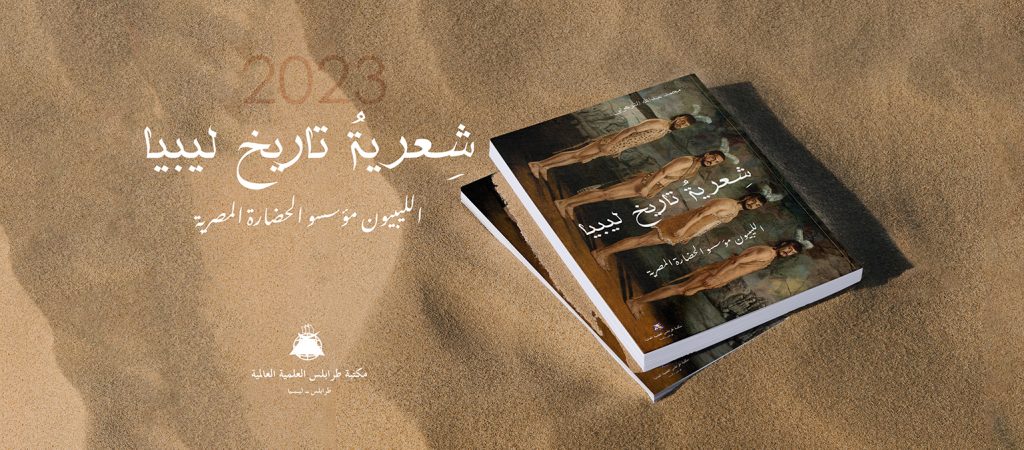
Book: The Poetics of Libyan History
Libyans: The Founders of Egyptian Civilization
projects: publication | Mohammed altrhuni, 2023
The book The Poetics of Libyan History is not merely a work that addresses Libyan history; rather, it constitutes a foundational source for our research project and a profound, interdisciplinary study on the influence of Libyan culture and its role in founding Egyptian civilization. When discussing “founding,” we address it at its core essence—that is, religion—through the nature of the relationship between ancient Egyptian civilization and the Libyan Western sphere, particularly concerning the cultural and religious influences during the formative stage of Egyptian religion within the context of long-term interaction between the Nile Valley and the Libyan desert and coastal societies.
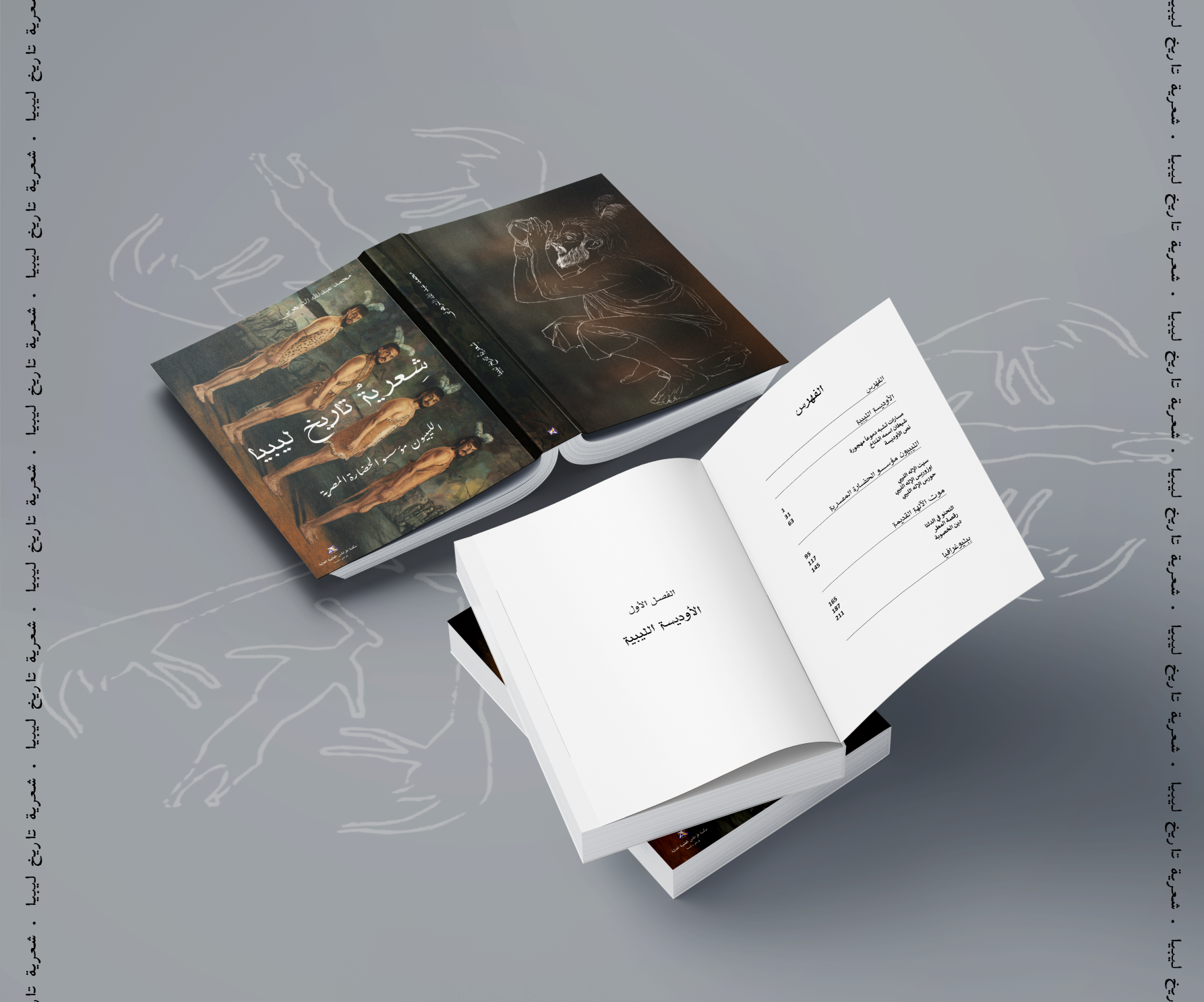
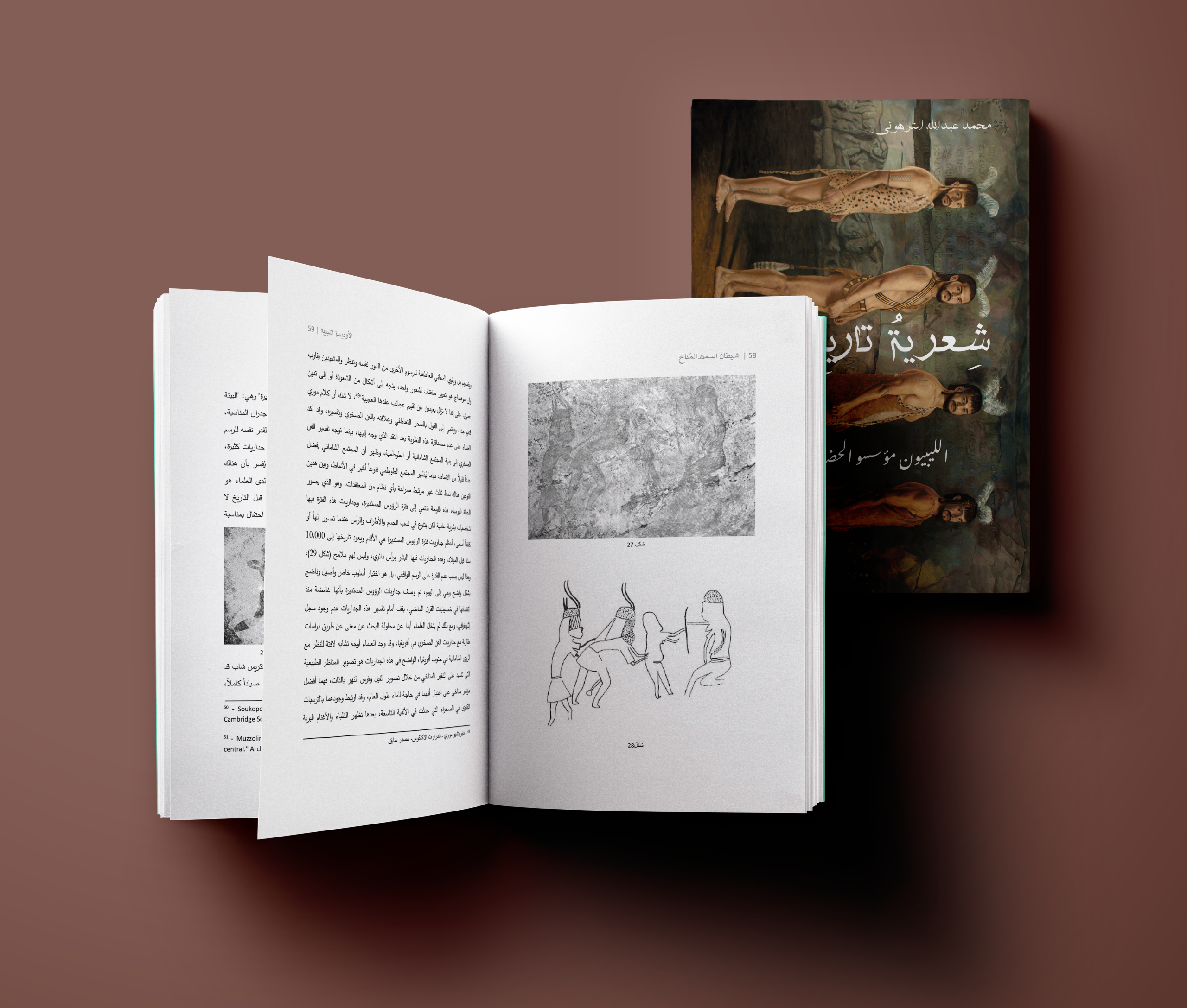
In The Poetics of Libyan History, published in 2023 by Tripoli Global Library, the writer and critic Mohamed Abdullah Al-Tarhouni presents his vision through an exposition and analysis of pre-dynastic inscriptions and the ritualistic funerary culture in Egyptian temples, linking them to the culture of the Libyan desert before and after the migration from the Acacus. The book includes several pivotal chapters, most notably the chapter “The Libyan Odyssey,” in which the author critically and analytically discusses the deliberate marginalization of Libyan history. It also addresses prehistoric Libya, the role of climate and its changes in shaping the awareness of ancient Libyans regarding the necessity of migration towards the banks of the Nile, pointing to the decline of the theory of Asian origin for Egypt in favor of the theory of Libyan origin. It affirms that the foundational elements of ancient Egyptian civilization were formulated in the caves of the Libyan desert, and that what followed was merely an expansion of concepts and ideas linked to the rock drawings on cave walls and valley sides in that symbolically fertile geography.
The second chapter, titled “Libyans: The Founders of Egyptian Civilization,” analytically addresses the origin story of the god Set and his relationship with both Osiris and Horus, as well as the settlement of Libyans in Upper Egypt prior to the emergence of the ruling elite. This settlement undoubtedly contributed to a radical transformation in the Egyptian system of thought and religion.
The final chapter, titled “The Death of the Ancient Gods,” examines the presence of the Tehenu groups traversing the desert into the Nile Delta, as the founders of Nile Valley civilization around 5000–6000 BCE. It also discusses the rain dance and the relationship of ancient Libyans with water and its technologies, leading to the fertility religion. In this context, the author analyzes the relationship between the Libyan god Set and his brother Osiris by defining the context of identity in collective memory and place as a language of longing for the ancient West, which, after migration, transformed into a symbolic hell.
In this book, within a geo-cultural framework of interaction, critic Mohamed Abdullah Al-Tarhouni seeks to deconstruct the traditional idea that portrays Libya as a marginal, isolated, and alien space relative to the banks of the Nile. He emphasizes the profound influence of Libyan desert beliefs on Egyptian religious conceptions and the critically important symbolic role played by Libyan tribes who migrated through successive waves. The book also highlights the roots of gods and symbols associated with the Libyan sphere and their impact on religious functions, extending to rituals and identity, and ultimately to the political role in the formative stage of early Egyptian religion.
Share now: