
Algulta
In the Shi’b al-Qulta, one of the mountain-valley reefs of the Black Mountains west of the city of Suknah, and before the land learned its own names, the violent nature remained an open page in the book of the world—fragile before time, wind, and rain, and before the intimate erosion of terrains that form without resistance, as if accepting its forsaken fate with a touch of ancient wisdom. Thus, mountains turn into an archive of absence, into a silent defeat of rocks before themselves, where the sun and the dense emptiness wrap around each other in eternal silence, mourning the ruins that slowly, profoundly, alter the shape of their own memory.
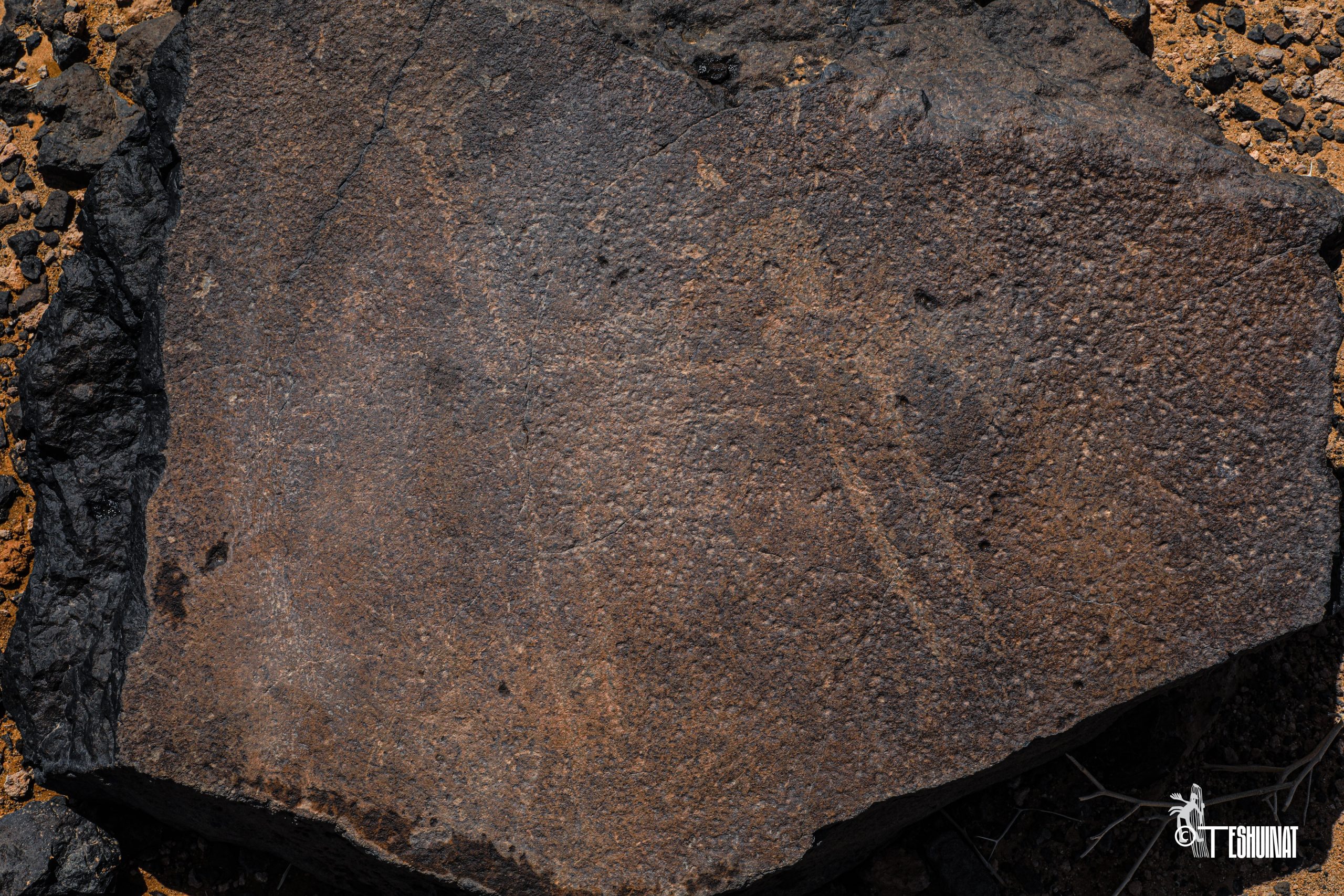
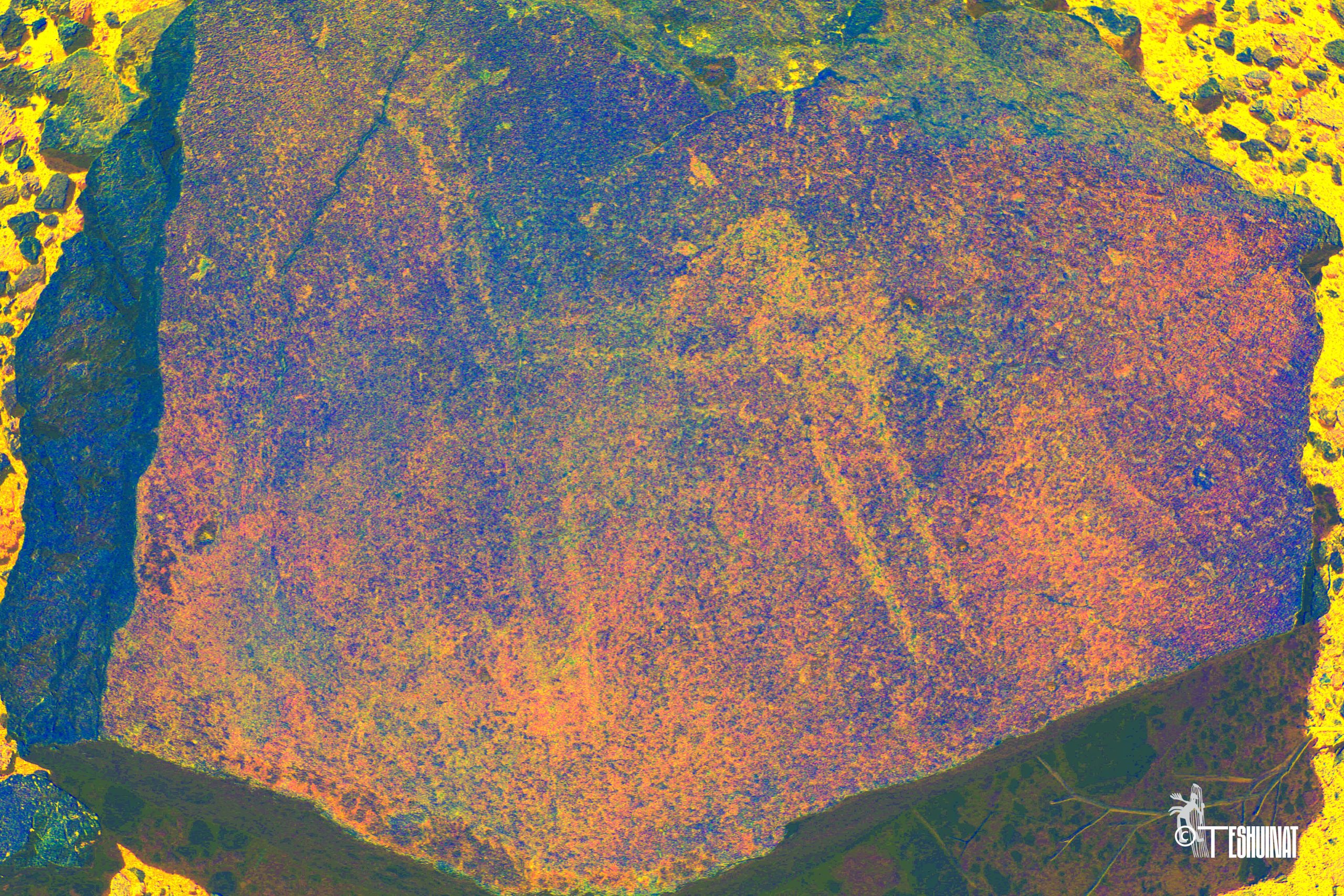
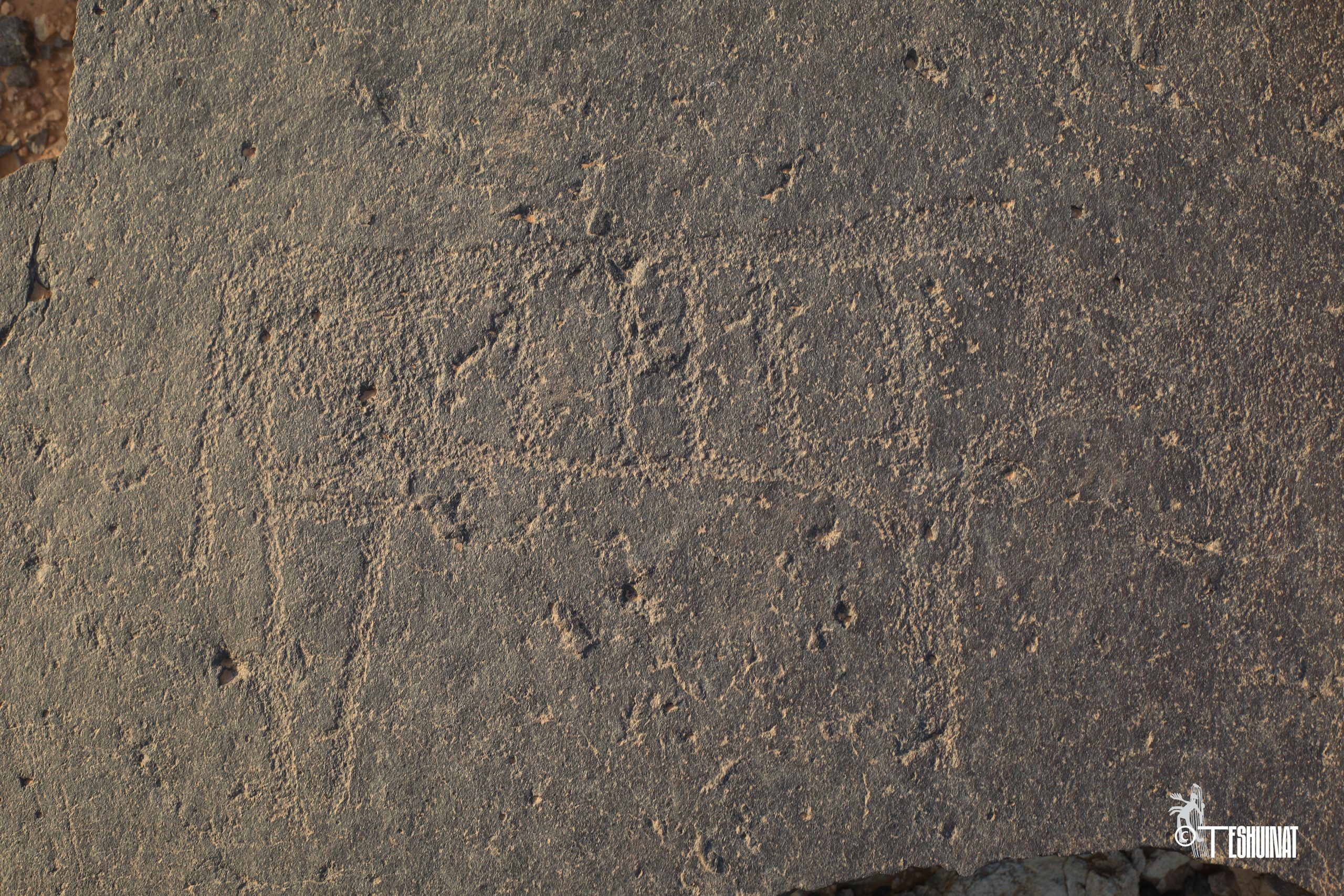
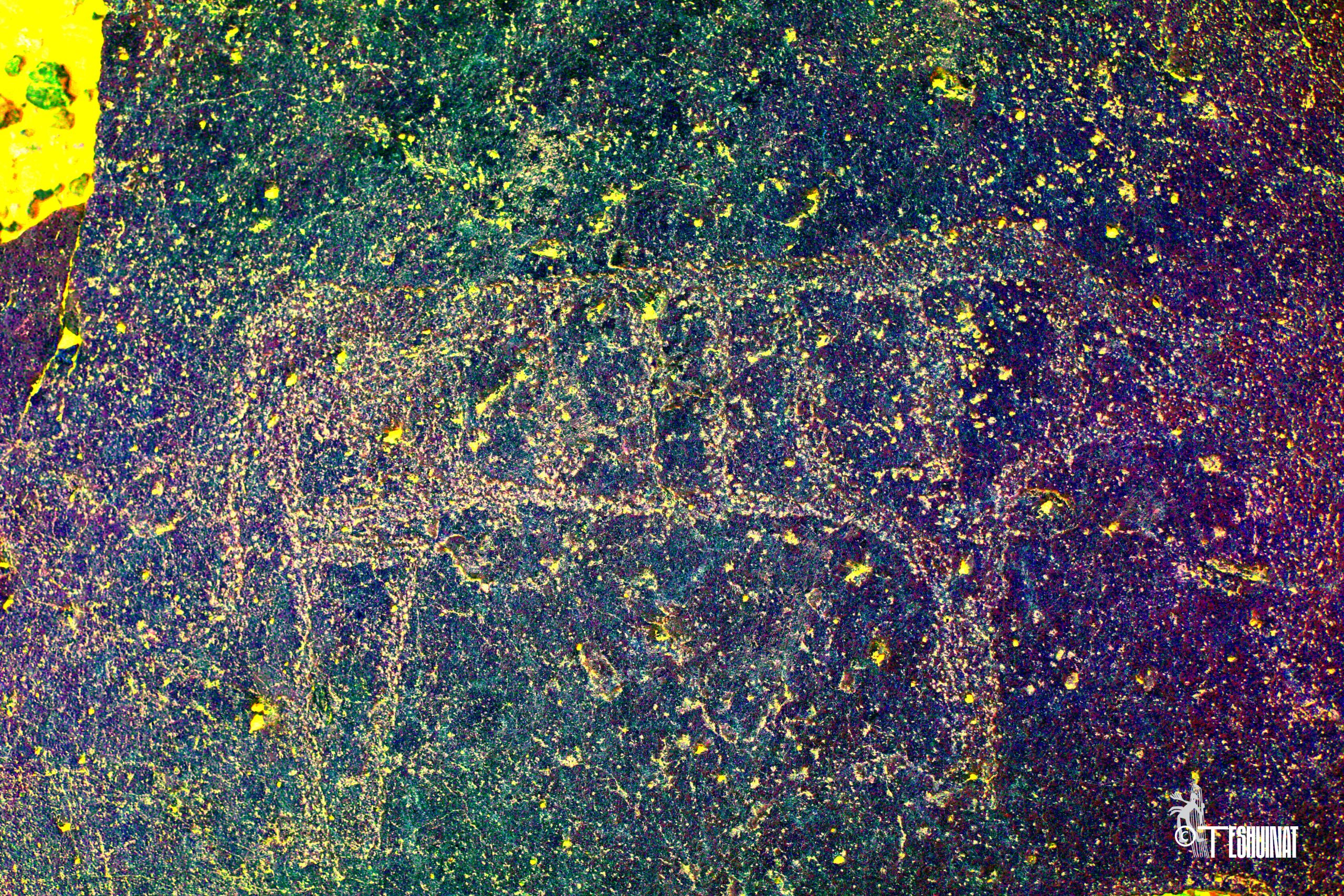
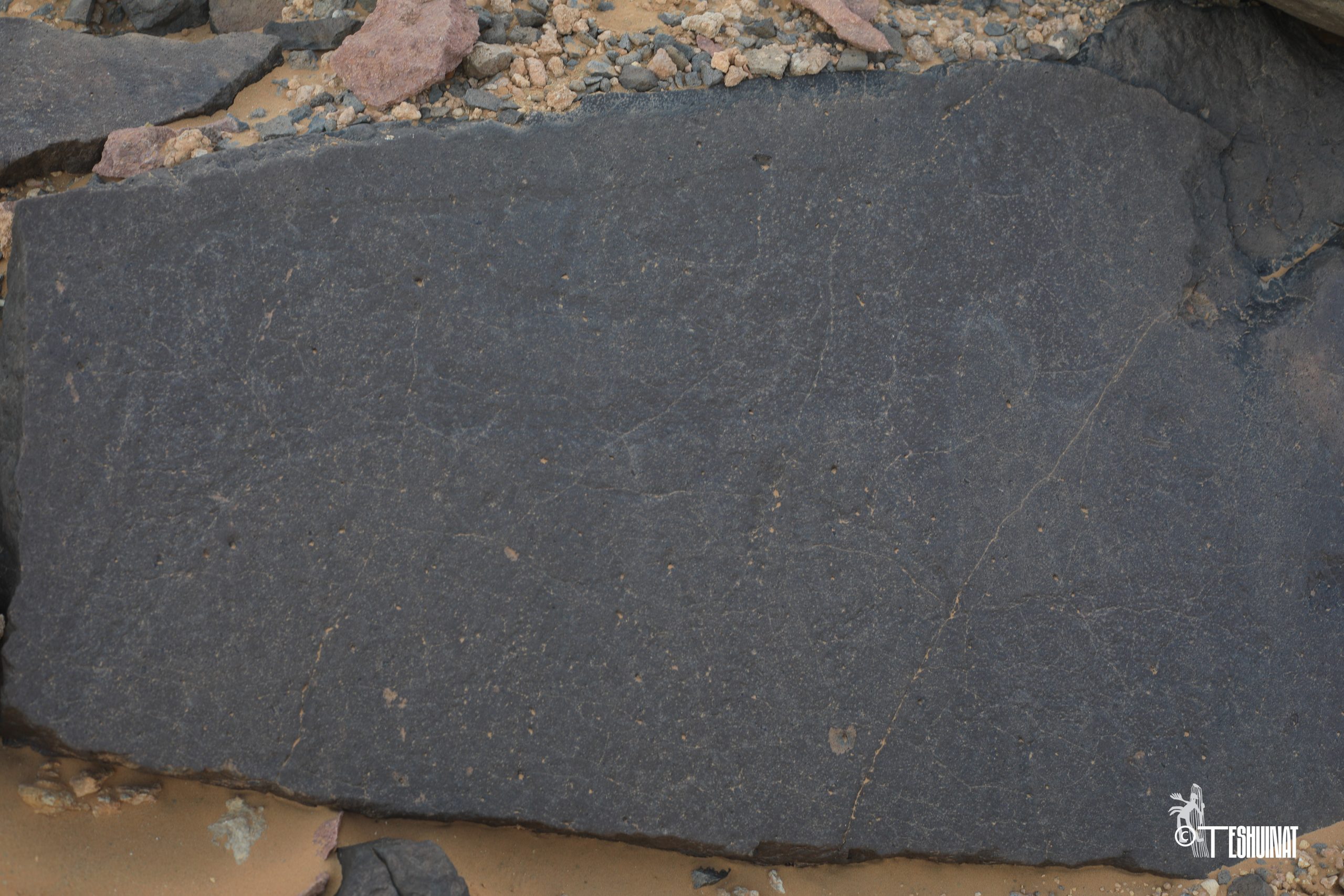
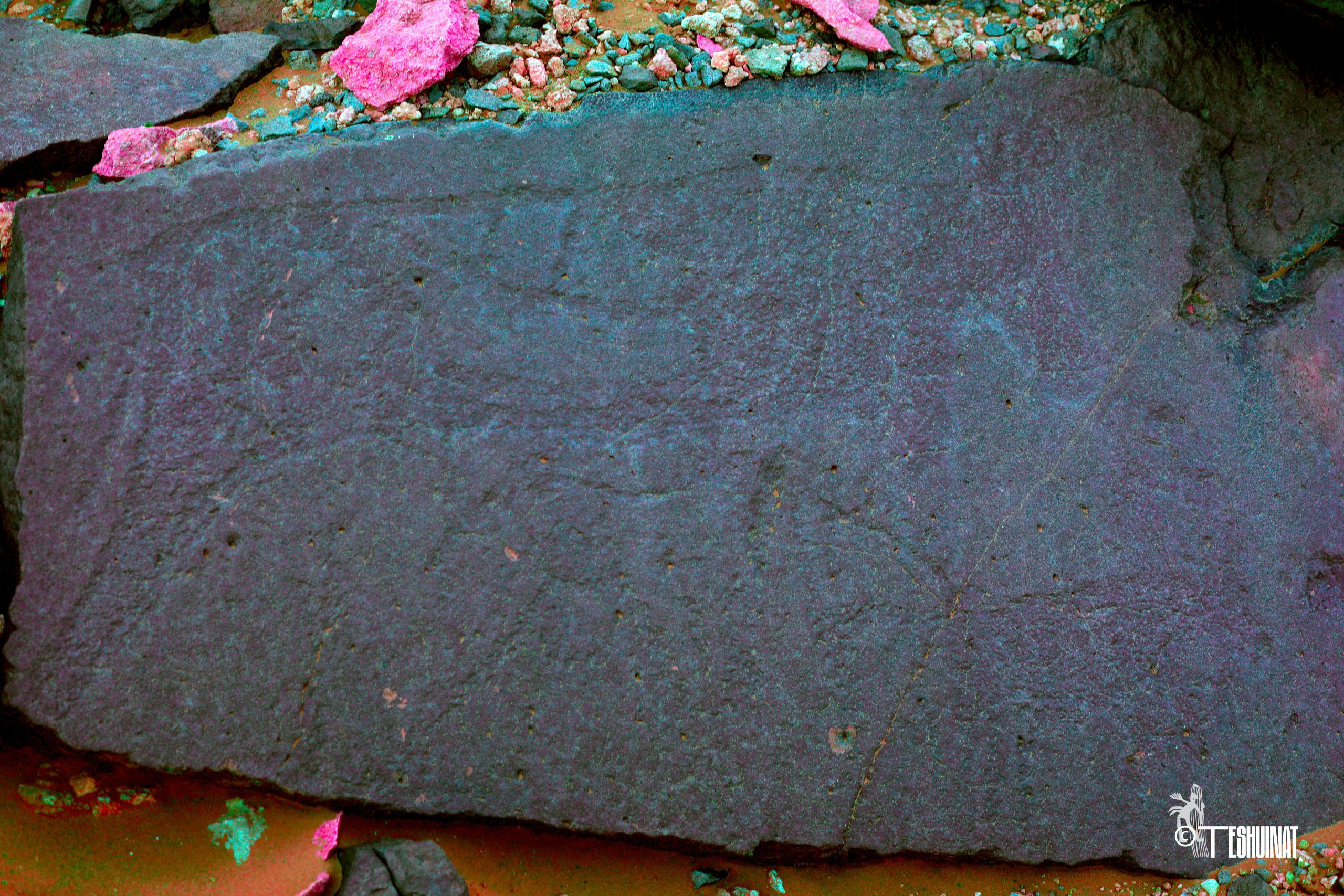
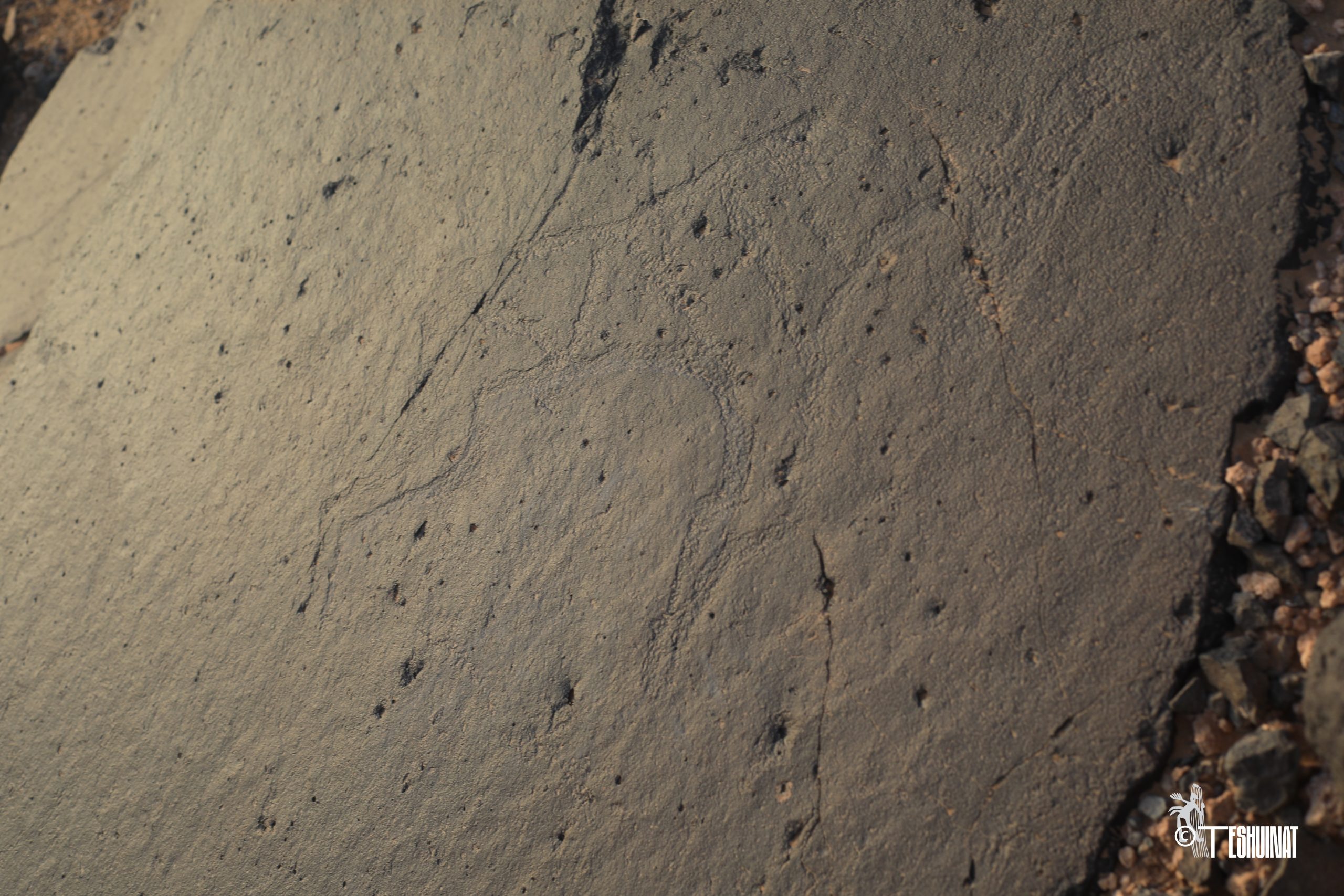
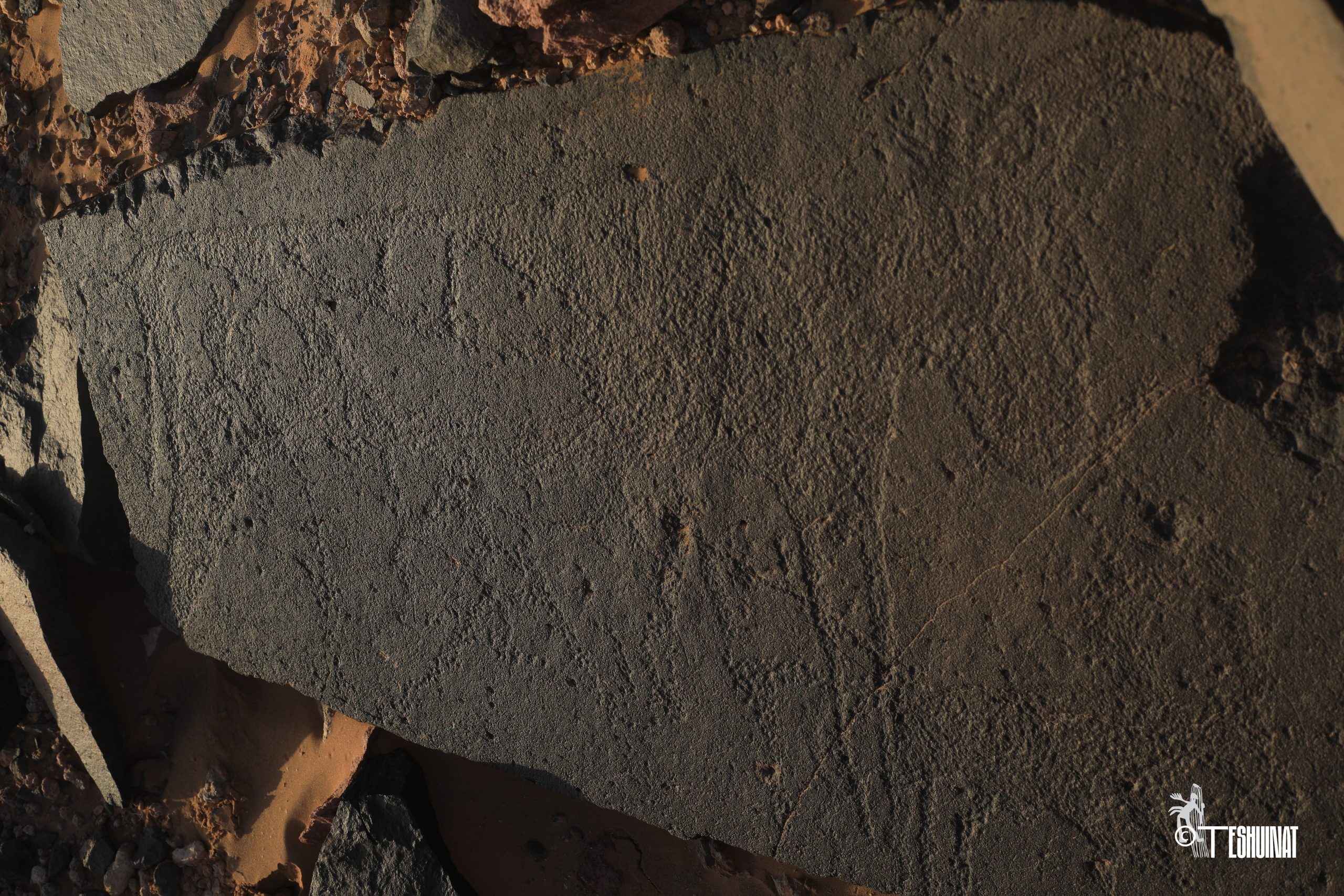
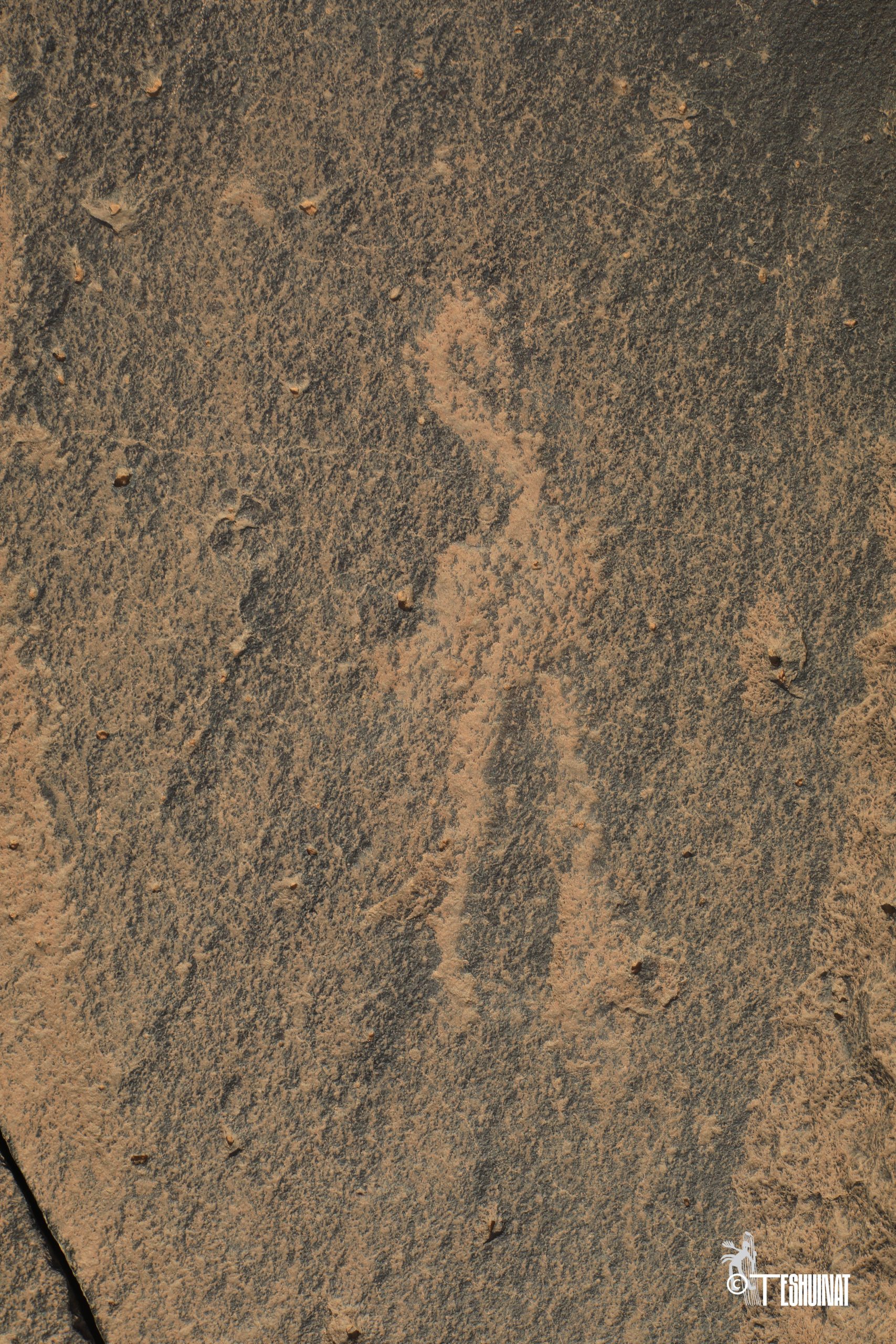
Photograghs taken by Essam elsabri. This work is licensed under Creative Commons Attribution 4.0 International

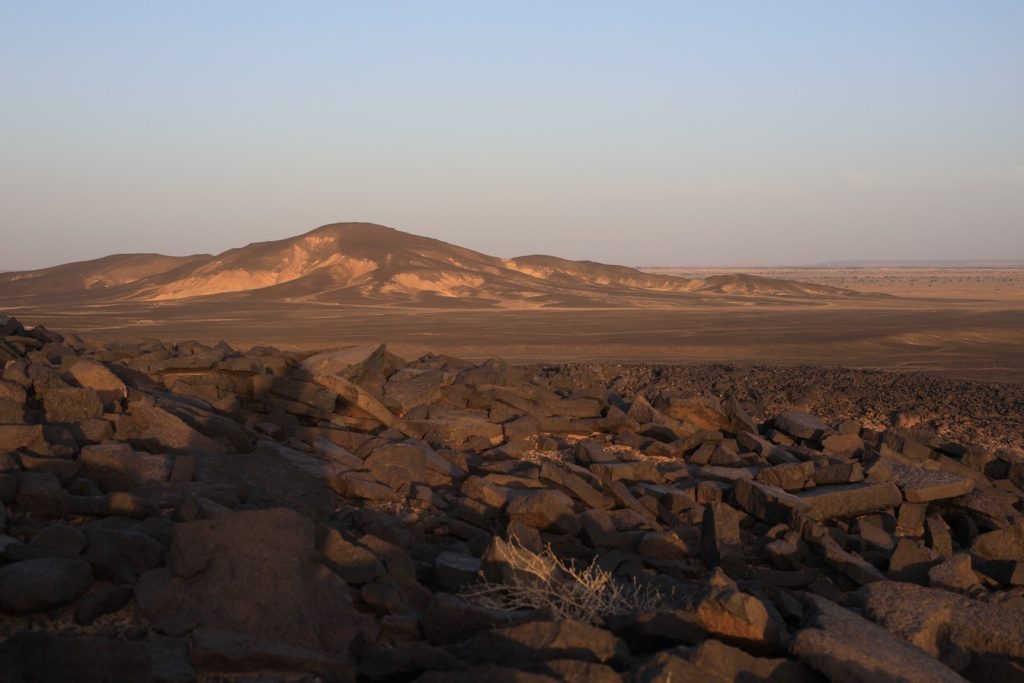
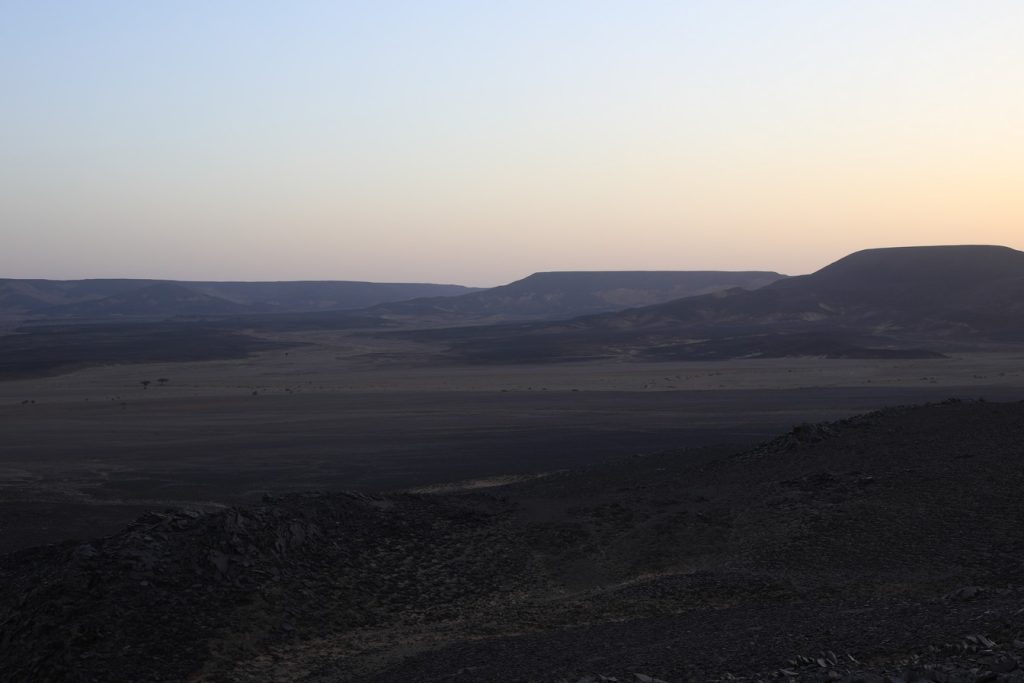
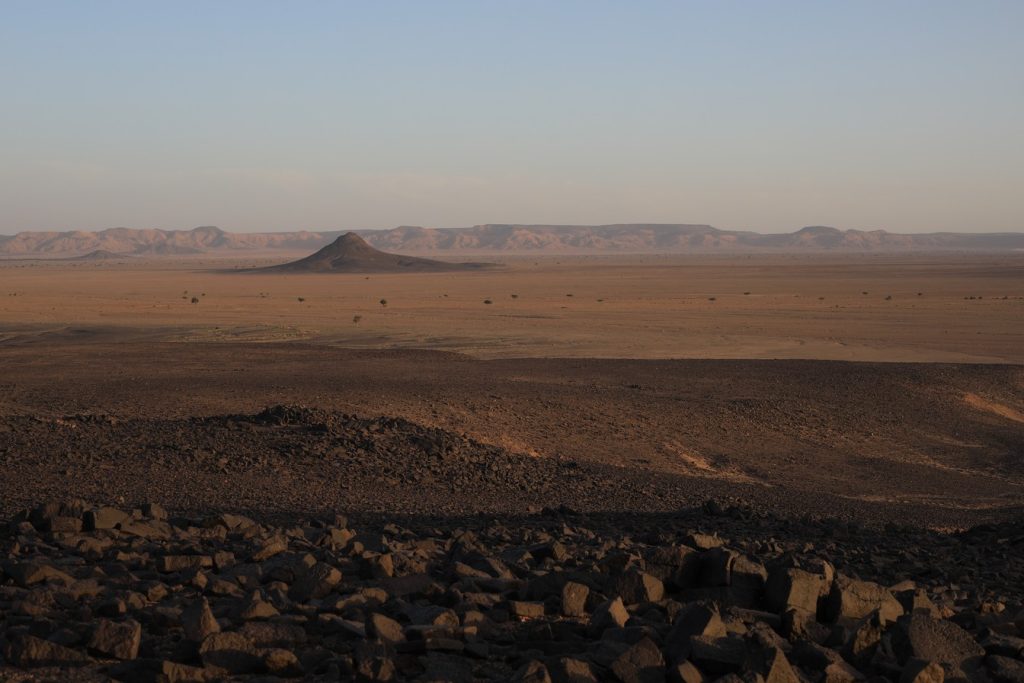
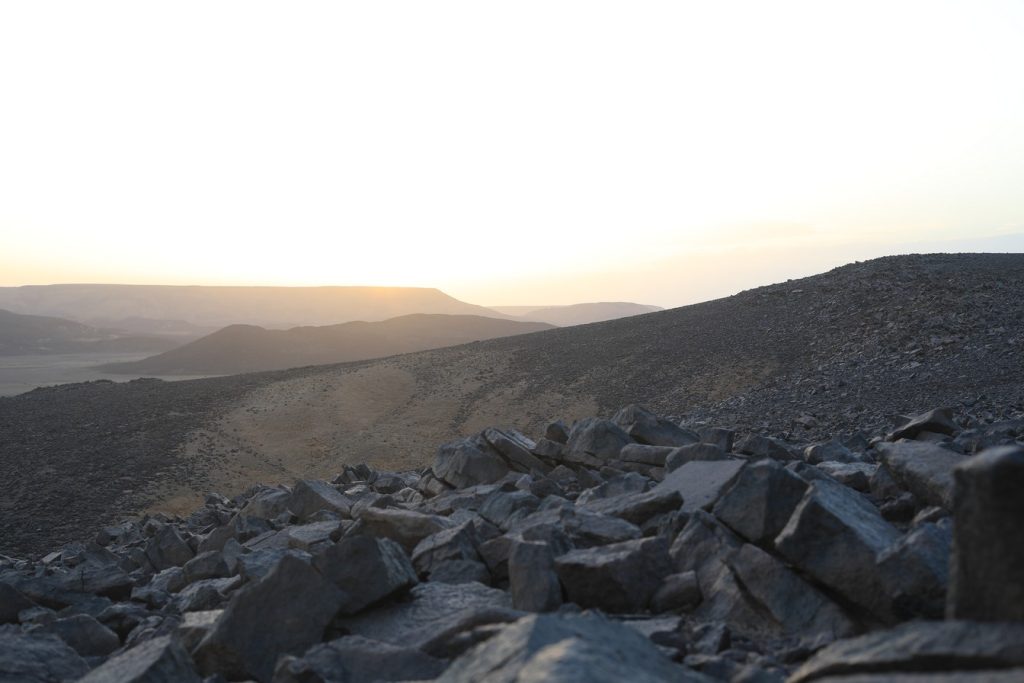
The valley is flanked by irregular rocky slopes and interspersed with large rock formations and stone basins that collect seasonal rainwater. The vegetation cover is limited, consisting mostly of short shrubs and drought-resistant desert plants. Work in Wadi Sarrat focused on locating rock inscriptions, most notably a carving at the top of a bend called “Wurzat” executed in a double-triangle style.
The reef begins with two heads descending from the peak of the mountain at the end of Kharmat al-Qannasa, running from north to south. They converge to form a single branch after approximately half a kilometer of descent.
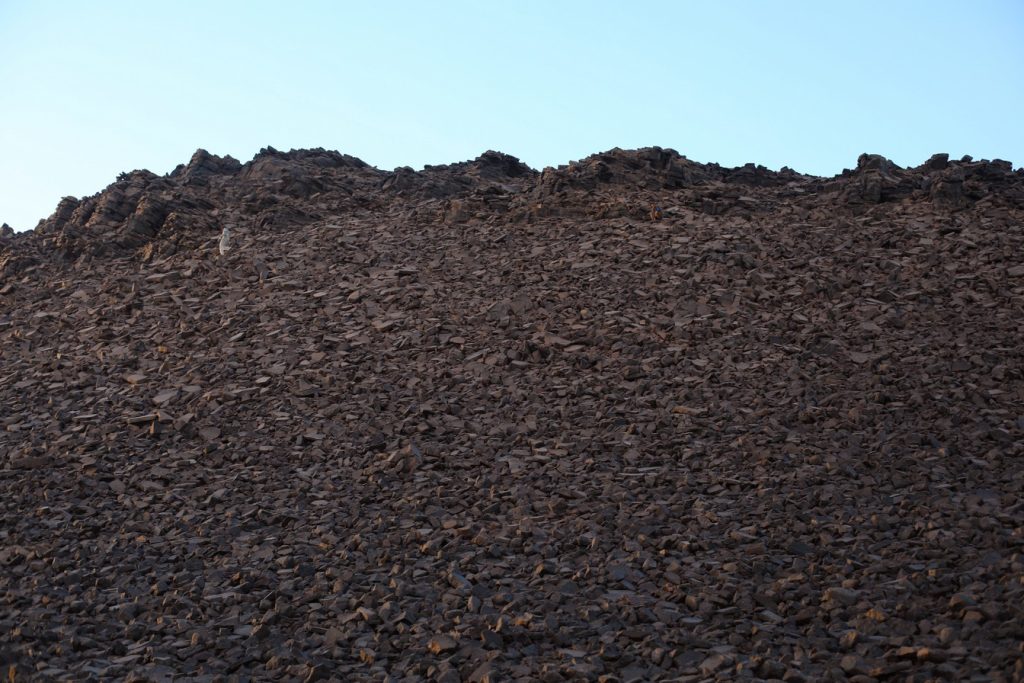
The rocks of this reef are volcanic and black, arranged in some places like terraced steps. Its course suggests it was once a flowing spring, evident from the erosion along some edges of the reef’s channel—indicating frequent water flow—as well as the collapse of certain surfaces, suggesting water once flowed beneath, carving out cavities that later collapsed.
Further evidence of the past abundance of water here is the presence of numerous rock inscriptions, which are typically found near ancient water sources.