Exhibition: Ethno Libya
Art and literature
project: exhibition | shefa salem, mohammed altrhuni, hamza alfallah, 19/12/2024
In this art exhibition, presented in two editions in 2024, and within the context of our work on Libyan history, we introduced this concept through a new experiment that blends visual art and literature as two complementary languages for narrating meaning and constructing memory. We were keen to present the visual works in this exhibition not as silent entities, but as entities in dialogue with the accompanying literary texts.
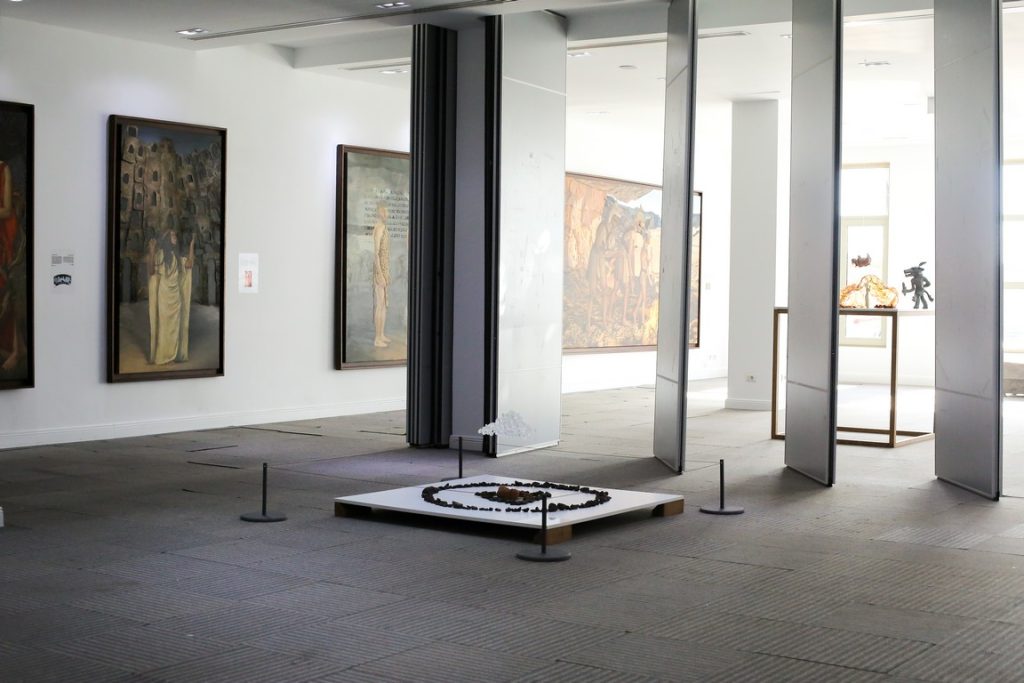
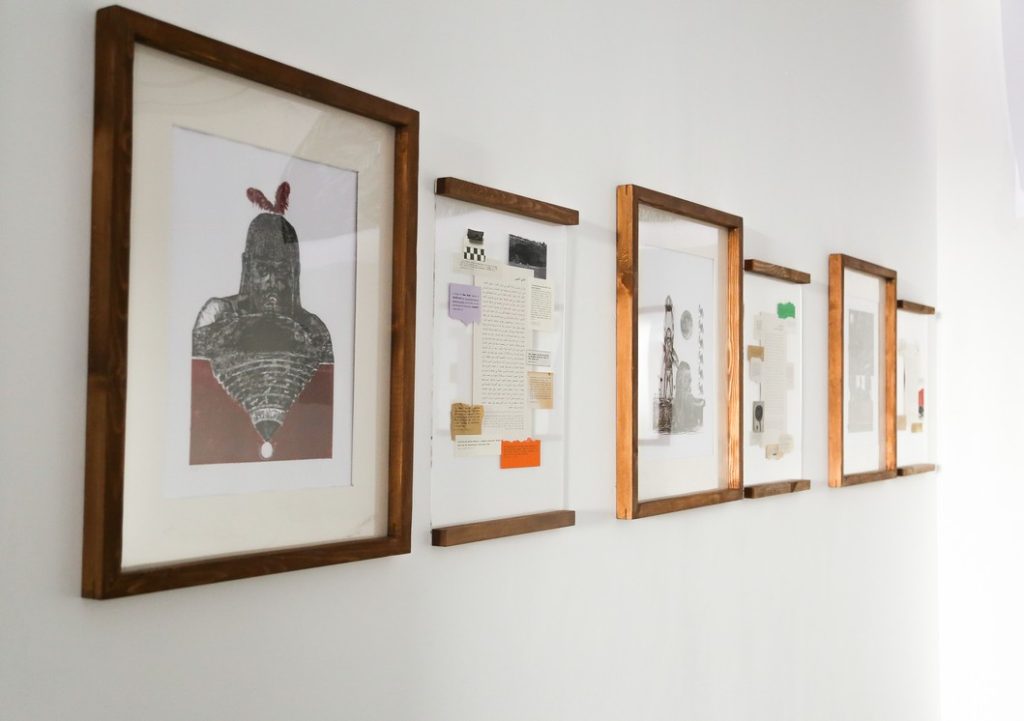
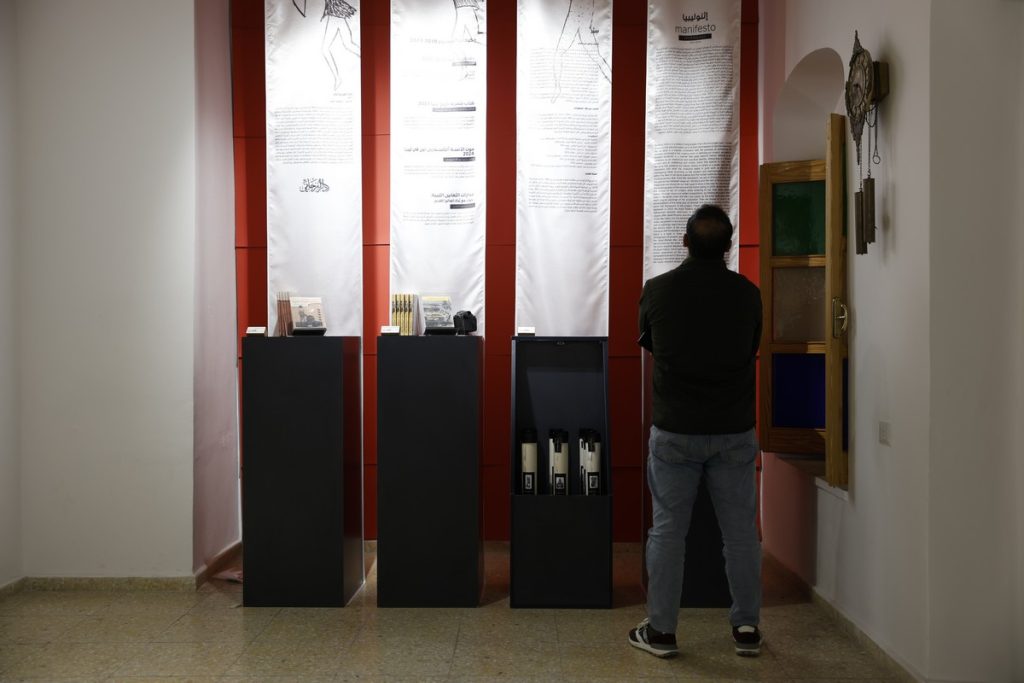
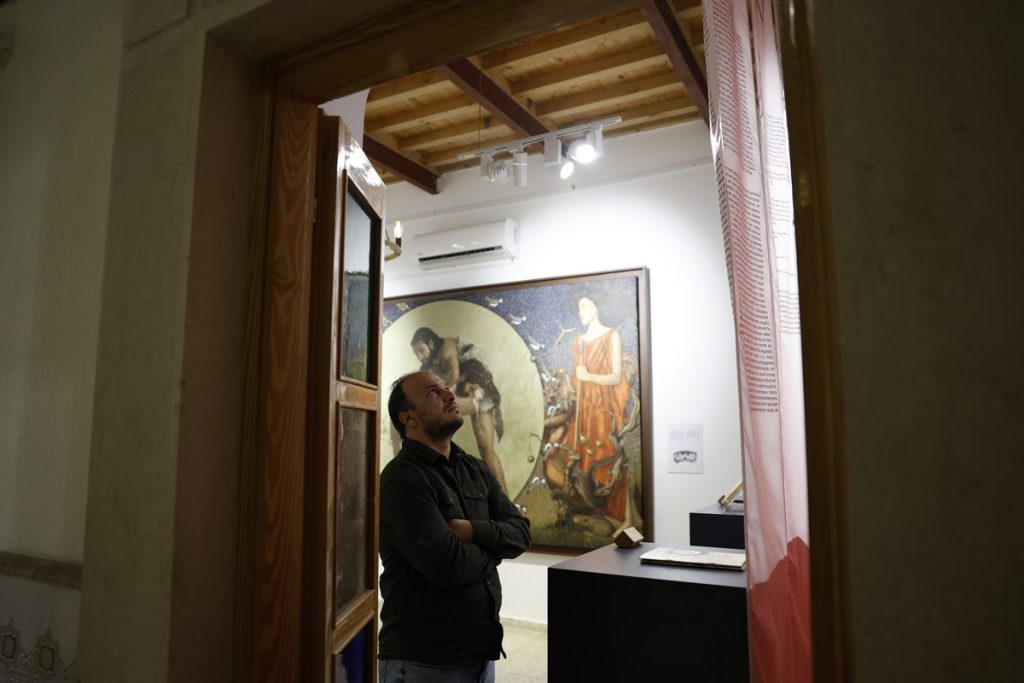
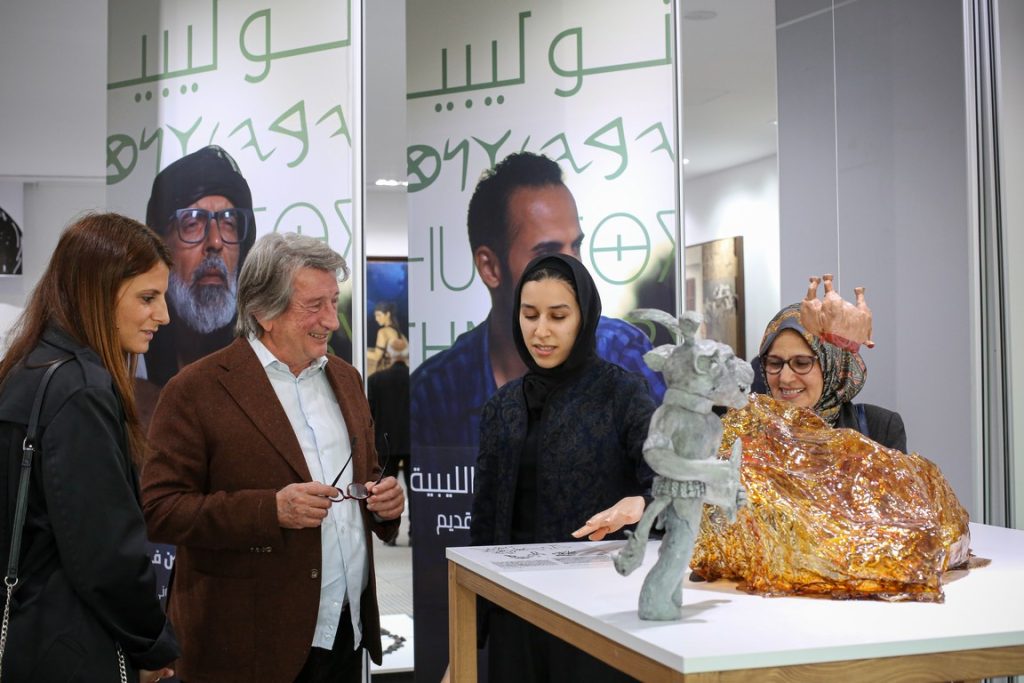
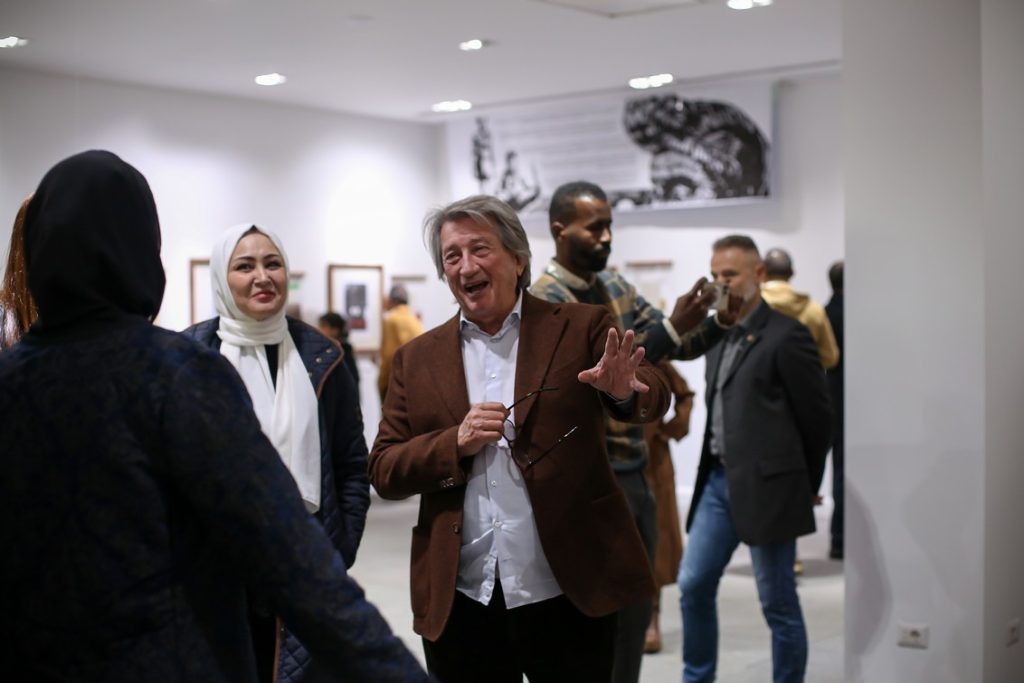
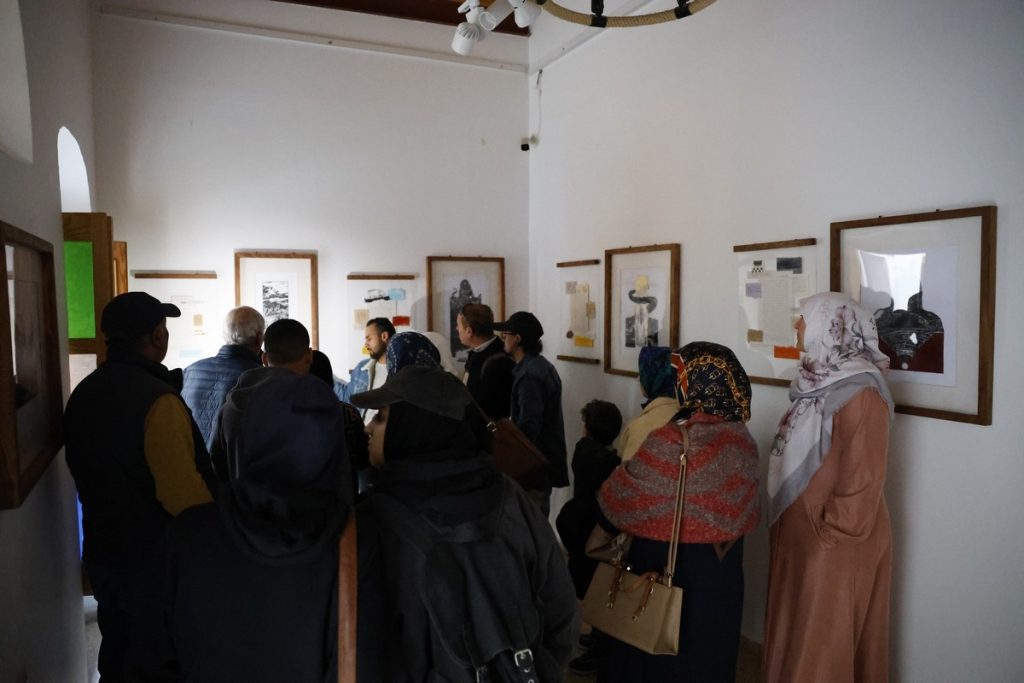
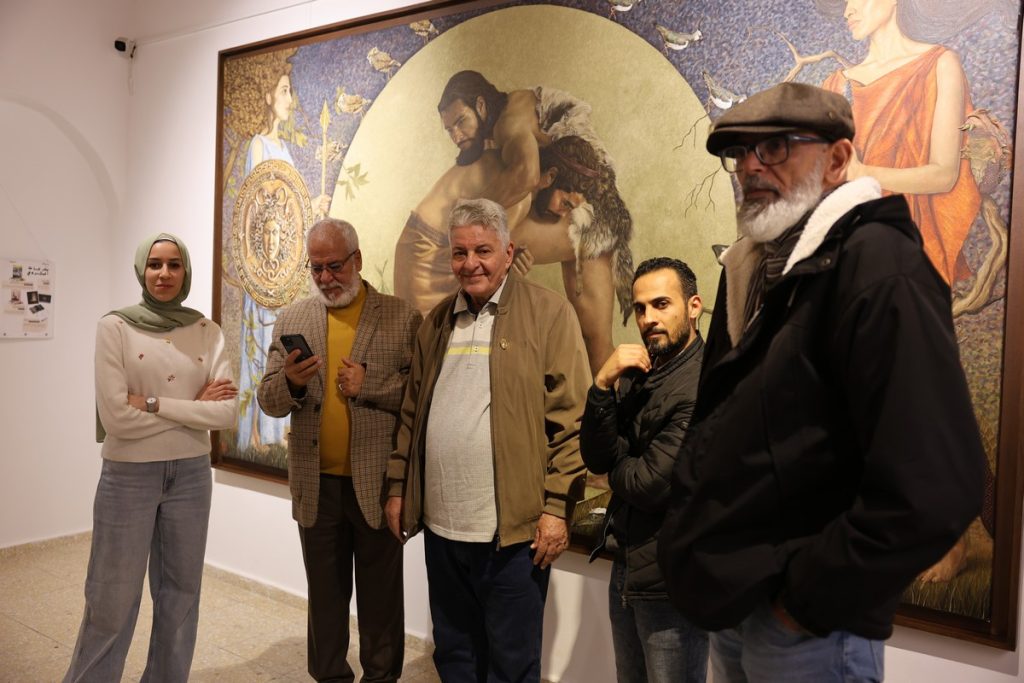
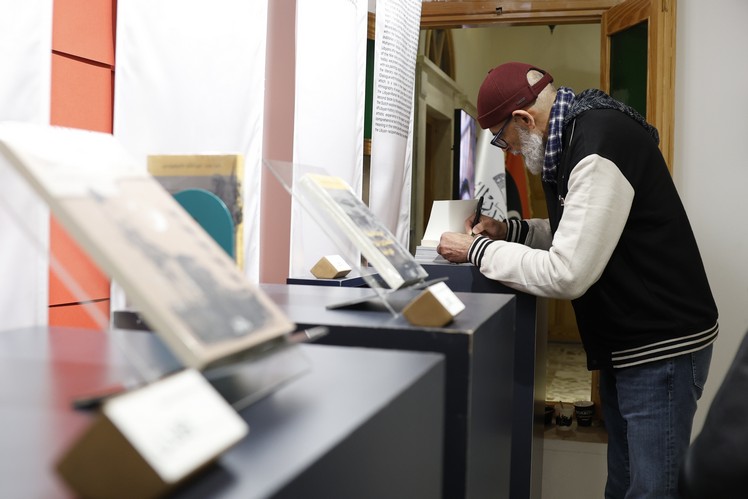
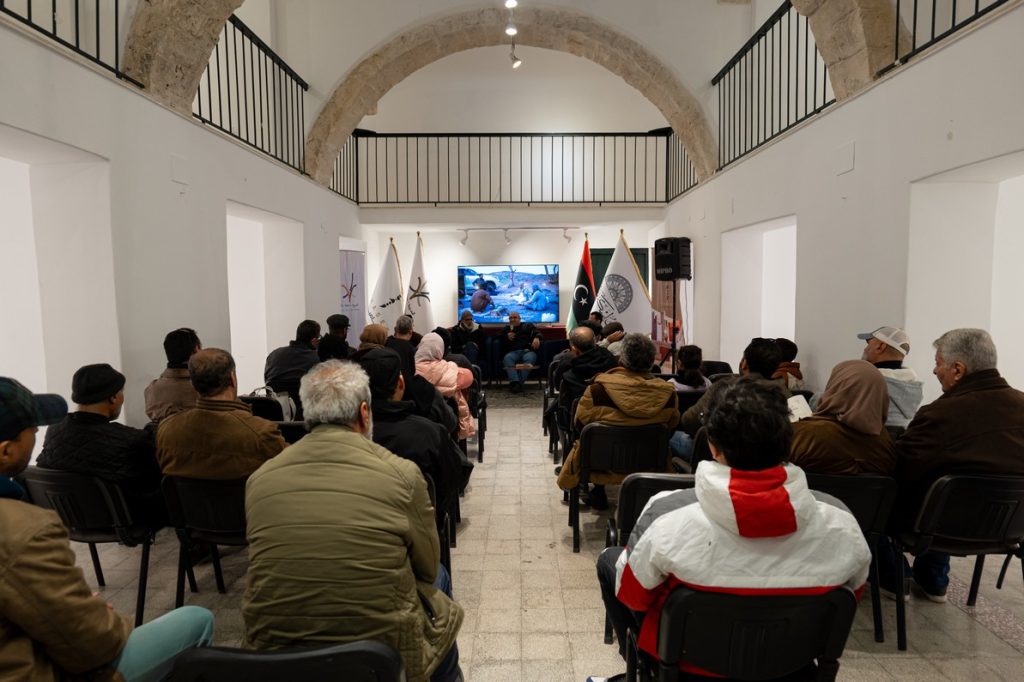
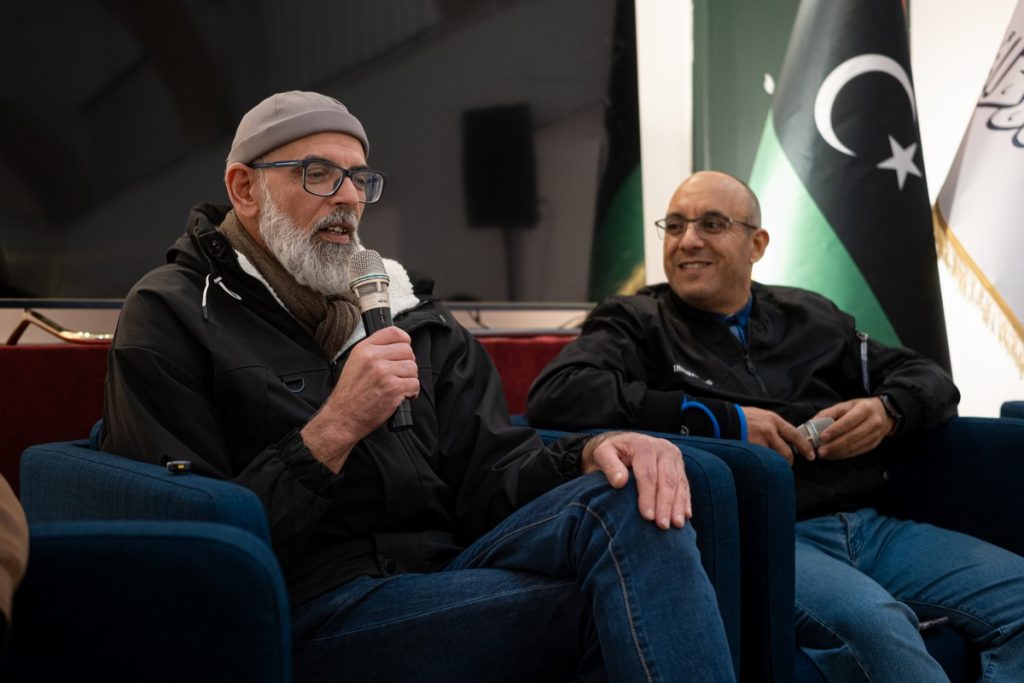
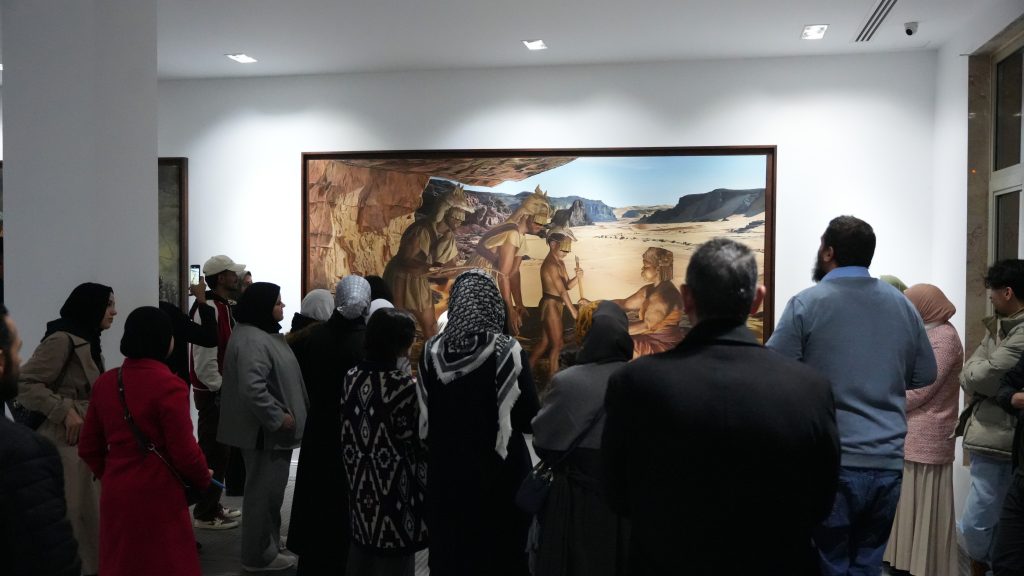
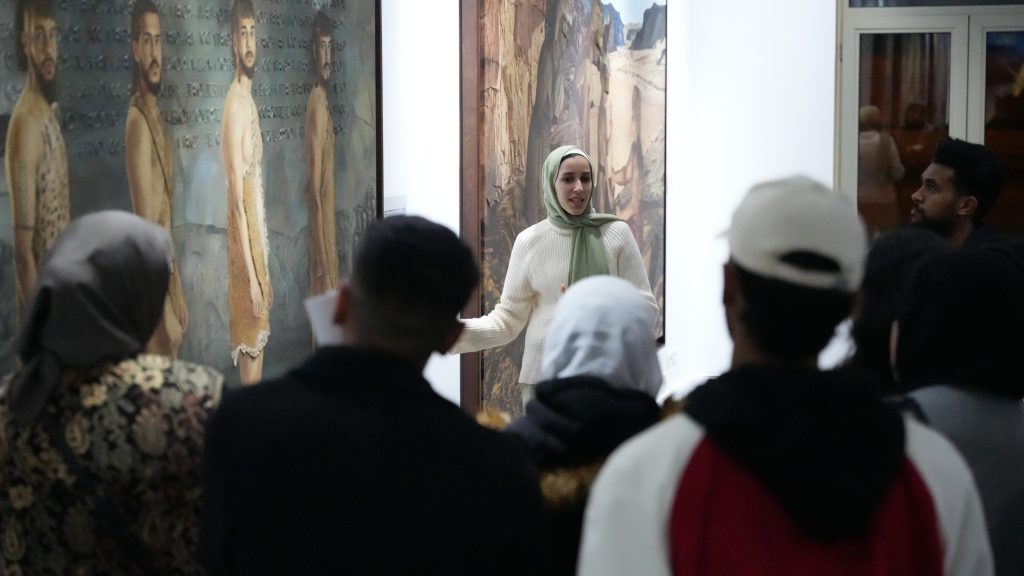
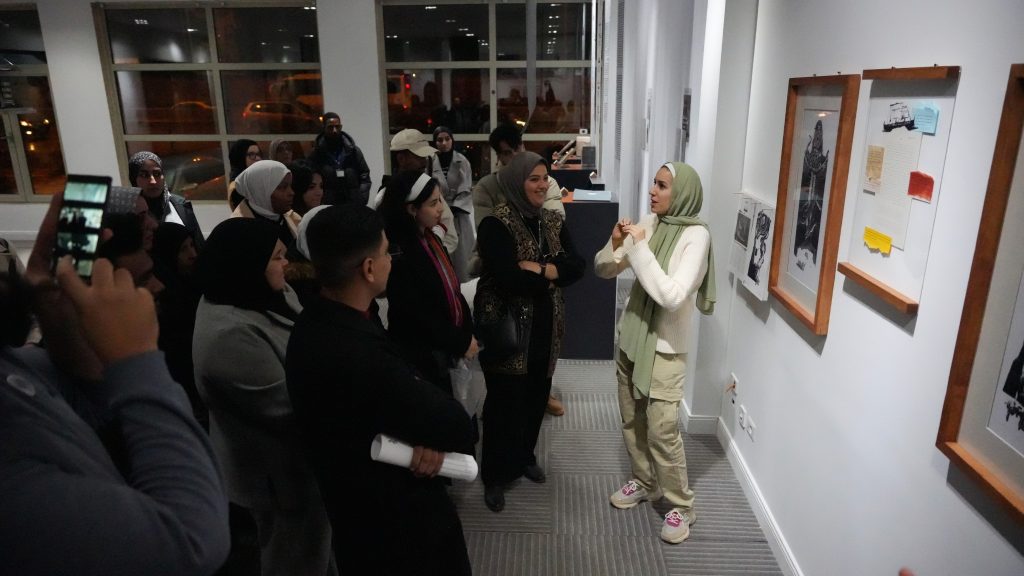
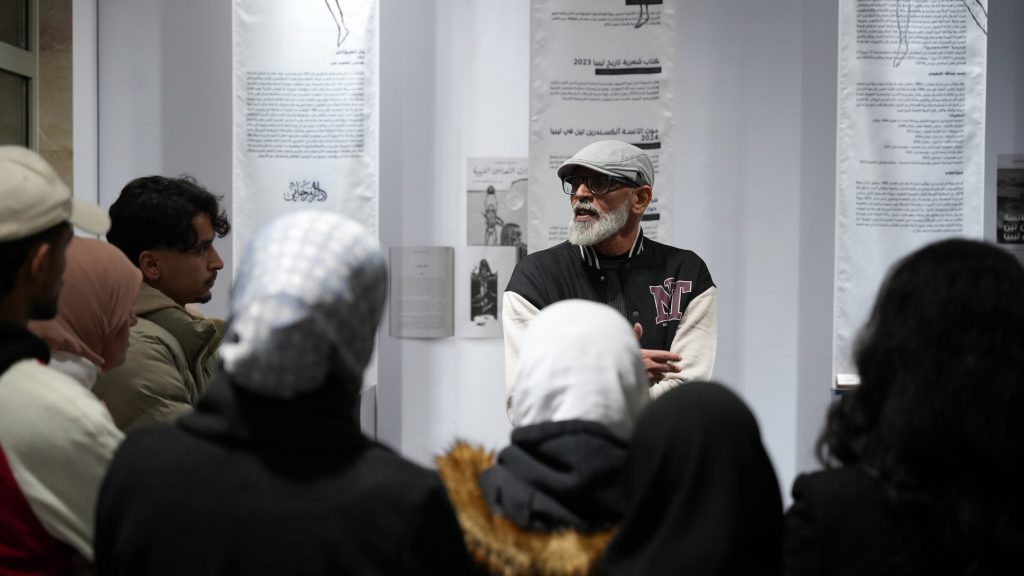
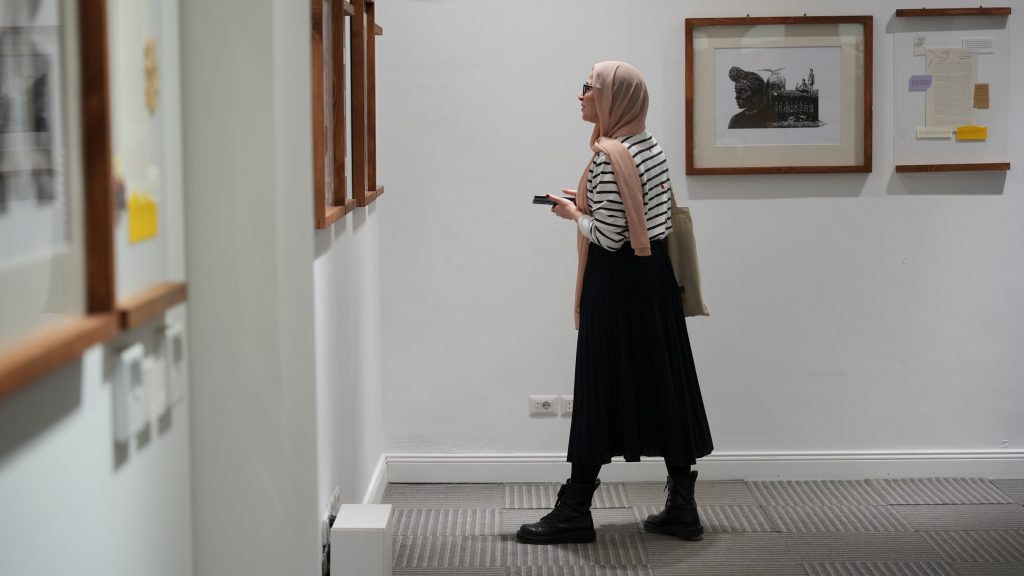
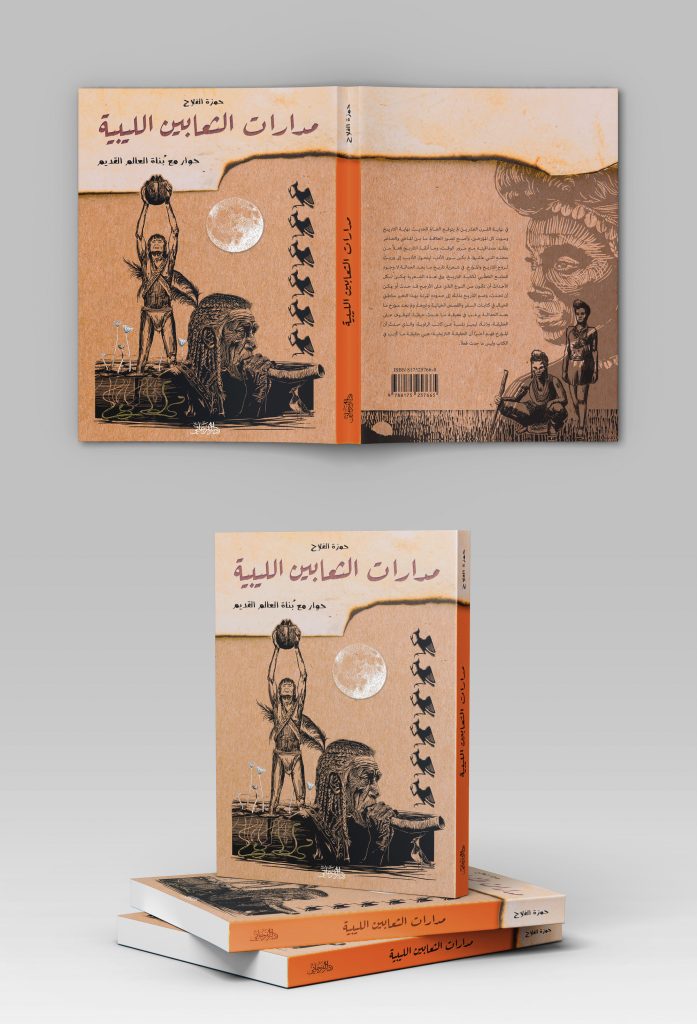
First, in the visual aspect, artist Shefa Salem, in her second solo exhibition “Ethno Libya”, presented six original paintings from her body of work, in addition to eight handcrafted prints inspired by the chapter on Libyan tribes from the book “Orbits of the Libyan Serpents” by writer Hamza Al-Fallah, plus two sculptures. The art exhibition was divided into two sections: the section for paintings and the section for handcrafted prints, sculptures, and books.
- The first painting, titled “Rituals of Consecration in Uan Tamawat – Acacus”, dates back to the Round Heads Period. It depicts a scene discovered by Fabrizio Mori, said to be 160 cm in size, featuring figures with masks similar to those found in Wadi Matkhandoush. The aesthetic beauty of this work lies in its depiction of the maternal role in desert society, expressed by the artist through the consecration and blessing of a boy initiated into hunting by the seated woman.
- The second painting, “Libyan Tribes – Reconstructing Collective Memory”, expresses the culture of ancient Libyans in terms of dress, appearance—from tattoos and ornaments to belts and hairstyles—and the types of leather they wore. This painting represents Libyan tribes in prehistoric times; it is a mural found in the Temple of Seti I. A key aesthetic aspect is that the artist worked on depicting the original Libyan attire—leather, according to studies—to correct the course of memory away from the imagination of the original painter and to avoid accepting the existing depiction without scrutiny as the accurate version of ancient Libyan tribal culture and attire.
- The third painting, “Sacred Singing – Shamounimz”, is a unique work depicting a singer figure from the Temple of Karnak during the reign of Osorkon I. This work specifically reflects the ancient tradition of Libyan singing in temples, a ritual reserved for maidens as part of religious ceremonial practices, similar to invoking prophecies and Libyan rain-making rituals.
- The fourth painting, “Libyan Amazons”, explores the depictions and representations of the strength of Libyan warrior women—the Amazons—who represent the true maternal world in contrast to the inverted Greek world.
- The fifth painting, titled “Libyan-Greek Conflict”, presents the idea of cultural conflict as a basis for Greek settlement in Libya. This conflict fundamentally revolves around the marginalization of the maternal desert society that dominated in pre-Hellenistic times versus the rise of the patriarchal Greek society. In this work, the Libyan goddess Athena represents this transformation and conflict with patriarchal society through her depiction with a spear and shield.
- The sixth and final painting in the first section, titled “Libya, Wife of the Libyan God Poseidon”, artistically clarifies the geographical name “Libya.” In the context of this painting, Libya is the place where the Greeks lived after their arrival and the foundation of Cyrene. It is worth noting, according to the description accompanying the painting, that this name appeared during this period as the name for the lady of the land, alongside Apollo, Cyrene, and Battus, who ruled the land from the Nile Delta to the Gulf of Sirte, from the mythological perspective of naming.


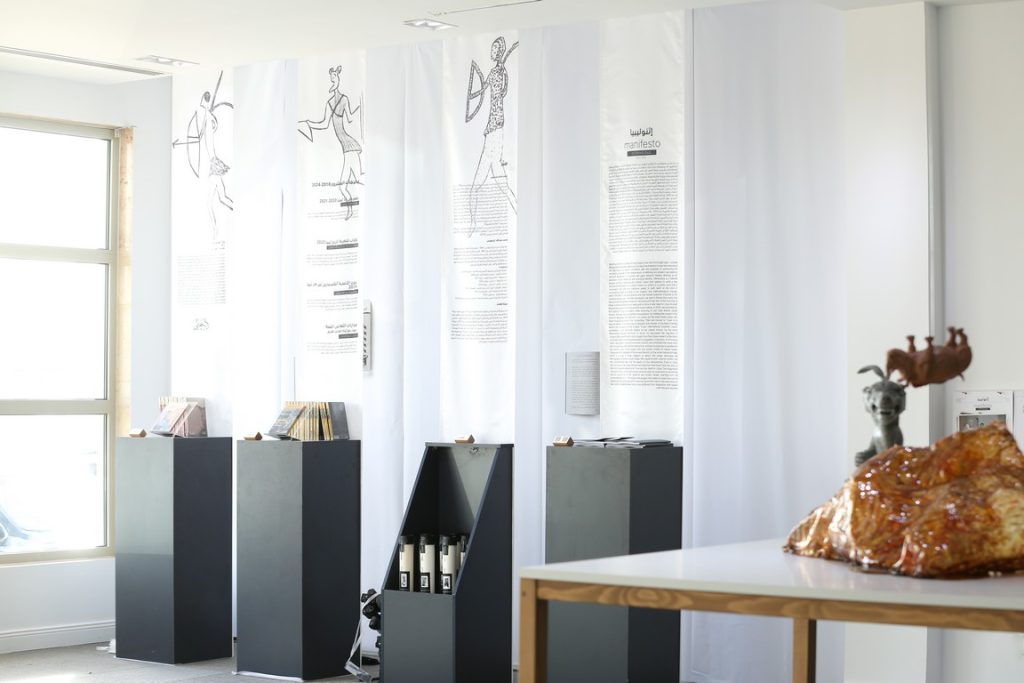
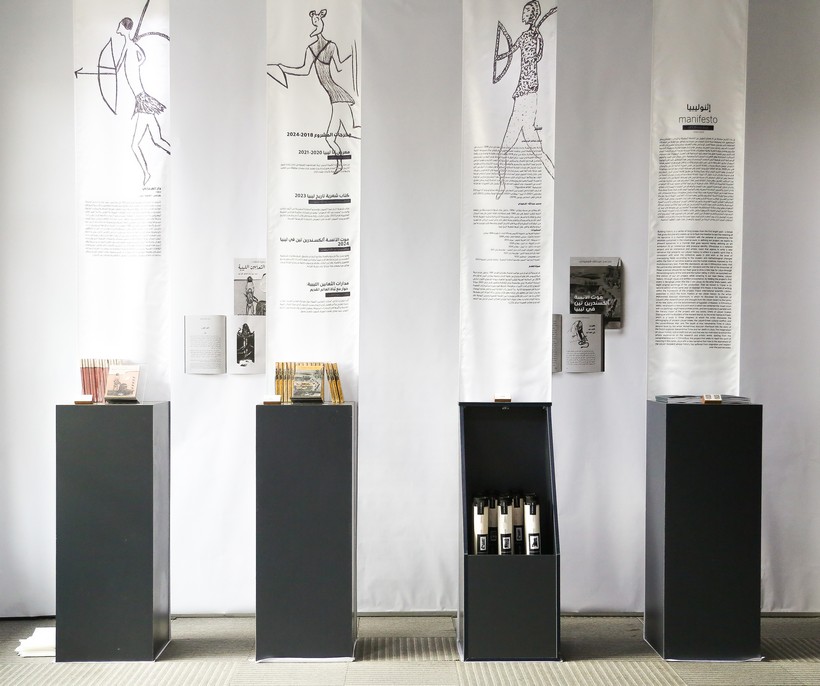
Regarding the section for handcrafted prints, the section opposite the paintings, we worked on merging images and words in an attempt to evoke the memory of ancient Libyan tribes, their customs, and the ethnography distinguishing each tribe. Selections were made from texts in the first chapter of the book “Orbits of the Libyan Serpents – A Dialogue with the Builders of the Ancient World”, a book comprising three chapters:
- Chapter One deals with the ethnography of Libyan tribes and their myths, highlighting their strangest customs and social behaviors in daily life. This book is part of the context of writing about Libyan history through interdisciplinary text, focusing on revealing the poetic spirit of this history as a reaction to the death of academic historical text, aiming to create a literary, contemplative vision that does not lack analytical methodology. This chapter is titled “On Libyan Tribes (1250 BC – 7400 BC)”.
- Chapter Two, titled “The Rising Culture (1250 BC – 146 BC)”, delves into a deep analysis showcasing the Libyan root of myth in Greek mythology and the influence of the Libyan sphere in all literature related to Libya.
- Chapter Three, titled “War of the Bare Legs (146 BC – 642 AD)”, addresses the Roman period and the complex relationship between the ancient Roman Empire and Libyan lands.
In the handcrafted prints section:
- The first print, titled “The Dream of Epaphus”, deals with the myth of Epaphus and the sinking of his ship in Lake Tritonis, according to the prophecy in Pindar’s Pythian Odes, about the divine right to stay and establish one hundred Greek cities in Libya. This dream represents the idea of cultural conflict between Greece and Libya, symbolized by the marriage of Epaphus, a crew member, to the daughter of the Libyan god Triton, who demanded they hand over the tripod according to the prophecy to save them from sinking in the sands of the dried-up lake.
- The second print, titled “The Schismatic Atlantes”, is about one of the ancient and mythical Libyan tribes mentioned by many Greek travelers. Regarding this tribe, Herodotus says: “A people who eat no living creature, and see no dreams in their sleep.”
- The third print, titled “The Besiles, Saviors of Emperors”, is about one of the most important Libyan tribes. The text discusses their strangest customs in medicine, social norms, and worship.
- The fourth print, titled “Dream Planters: The Lotophagi and the Lotus Flower”, addresses the subject of the Lotophagi tribe and their veneration of the lotus plant. This flower gathers characteristics of the Libyans: its stem resembling a serpent (a symbol of water), the feather-like feature on its petals, its state of floating in the swamps where it thrives, and its representation of the solar boat.
- The fifth print, titled “The Unfortunate Jesters and the Women of Machlye”, is a text that presents the strangest marriage customs with women of this tribe and the celebratory atmosphere before proposing to the bride.
- The sixth print, titled “Ghosts of the Adyrmachidae”, discusses the most important customs that distinguish them and the relationships between women, men, and kings within the tribe.
- The seventh print, titled “The Gzantians and the Gate of Bees”, narrates this tribe’s relationship with bees and presents the Libyans’ connection to its worship and trade.
- The eighth print in this section is titled “The Libyan Nay” and deals with the concept of the nay (flute), the relationship of early humans with this wind instrument, and the discovery of music. In the prints section, the work relied on synthesizing image and text, exploring how to create a visual narrative based on the ethnography of these tribes through the inherent poetry of the text itself.


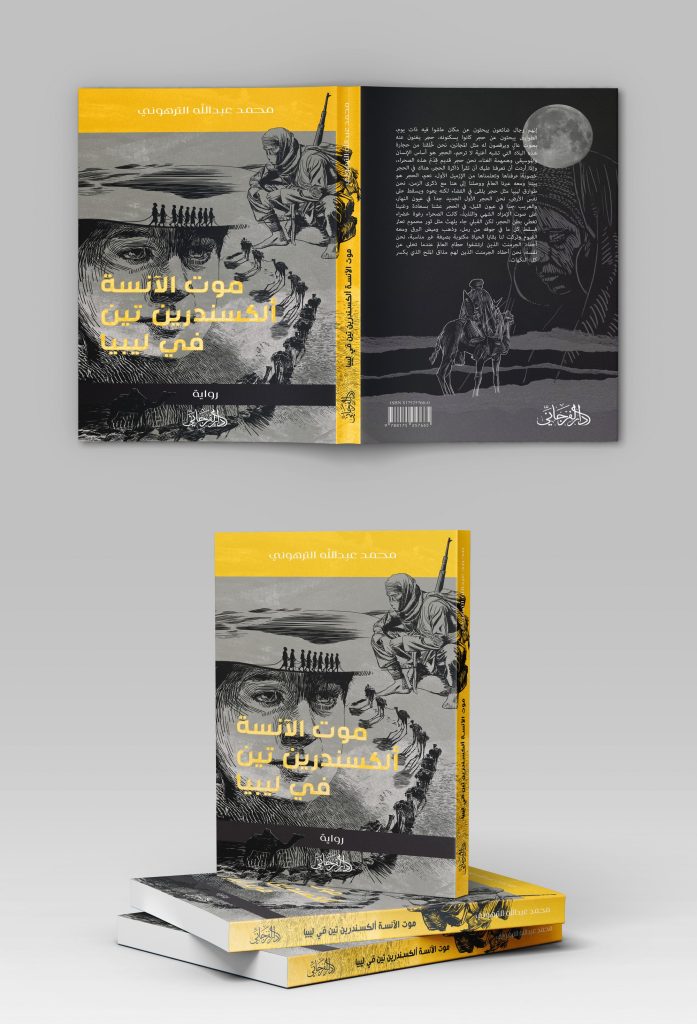
In the same context of visual and written work, an effort was made to realize the characters from the novel by critic and writer Mohammed Abdullah Al-Trhouni, titled “The Death of Miss Alexandrine in Libya”. This historical novel tells the story of the death of the Dutch explorer in Libya. The novel is based on placing the adventure in the space of the Great Sahara Desert, with the city of Tripoli as one of the important stations where the explorer stayed before her death. The writer bases this work on real events, narrating the tale of the young traveler who lived her adventures in North Africa, including Libya, during the nineteenth century. This work is a tale of historical documentation with the spirit of literature and the emotional adventure of a dream, seen through the eyes of characters who found in surviving distant dunes their greatest hope for finding the last glimmer of hope in the sorrow of the desert.
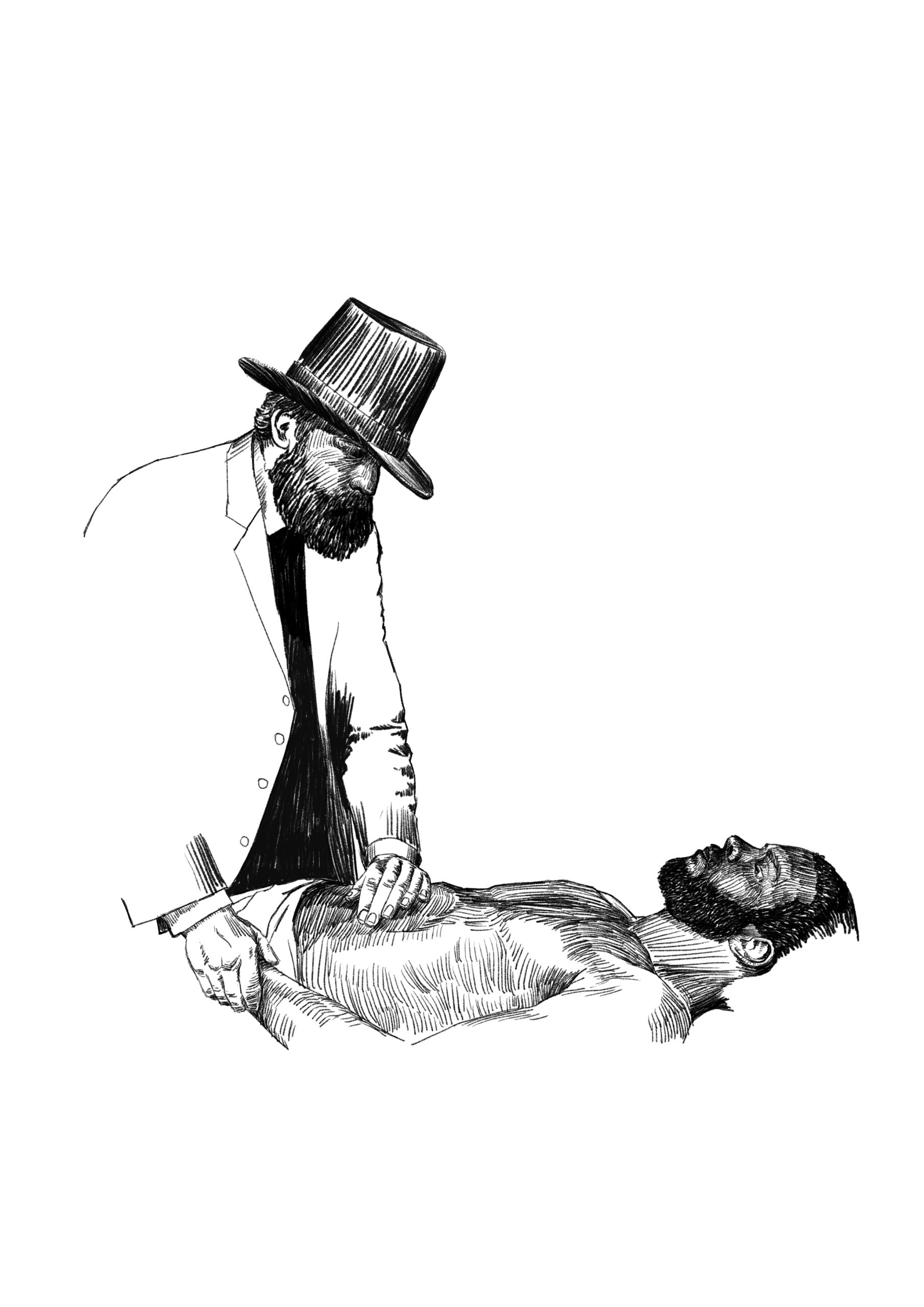
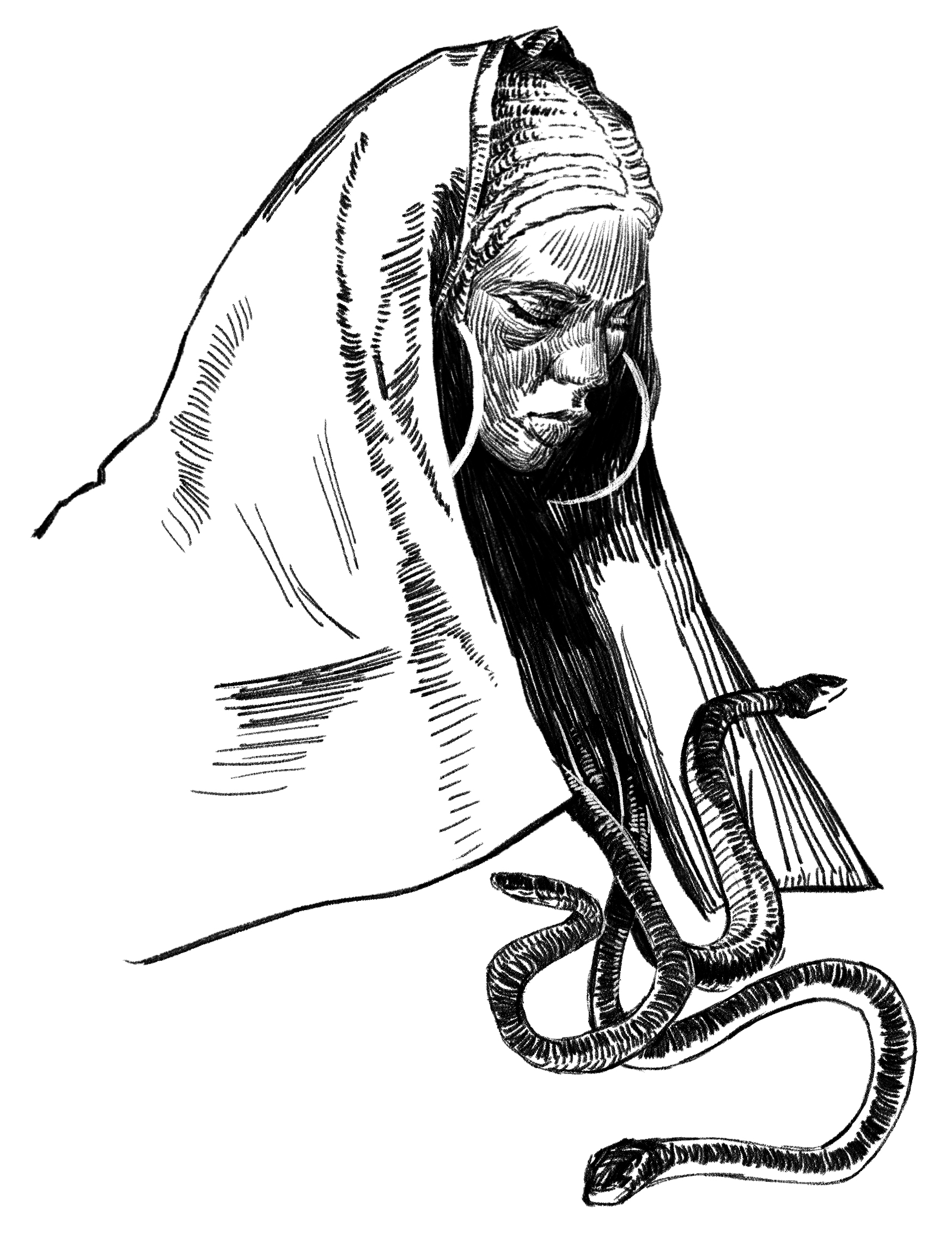
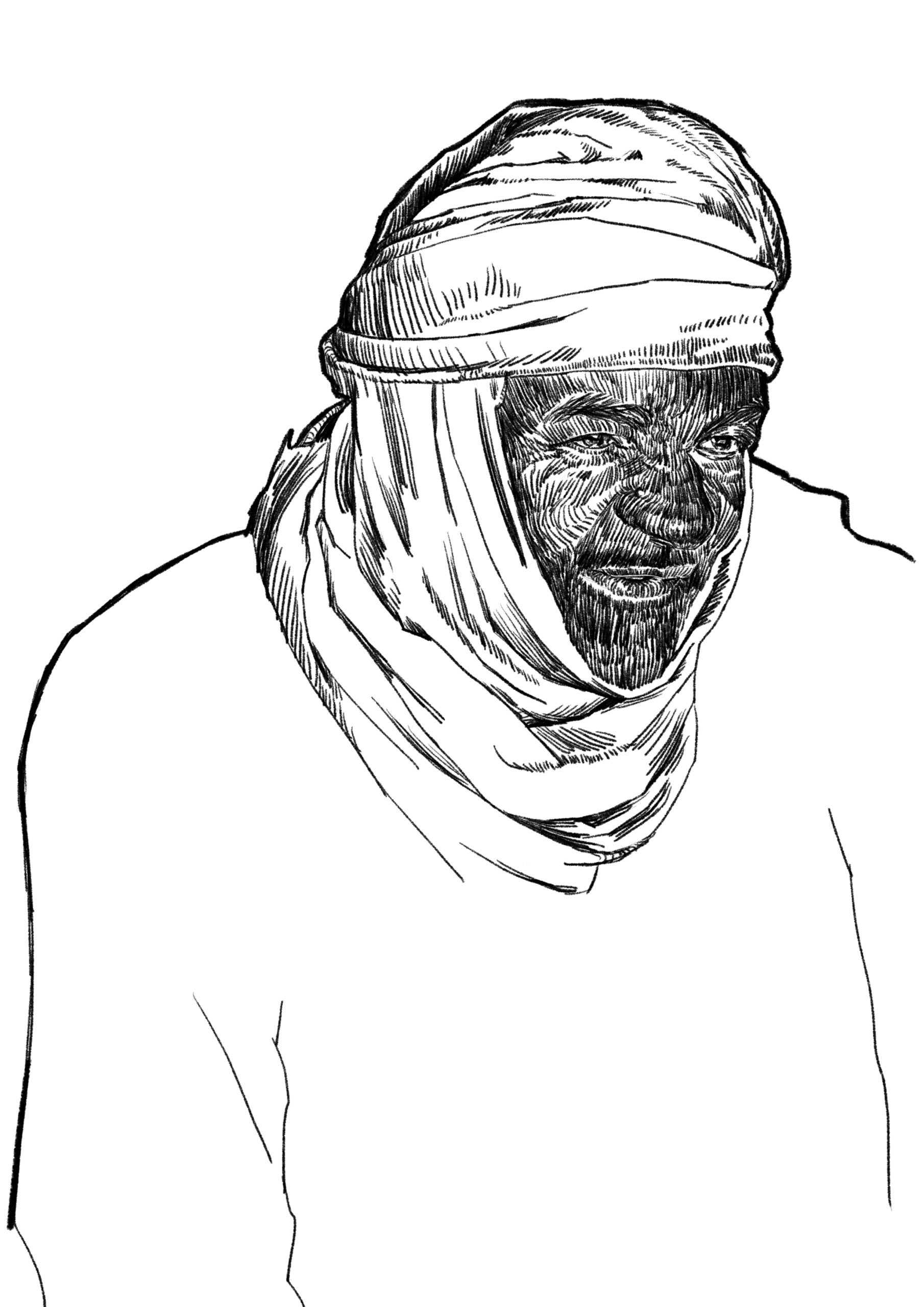
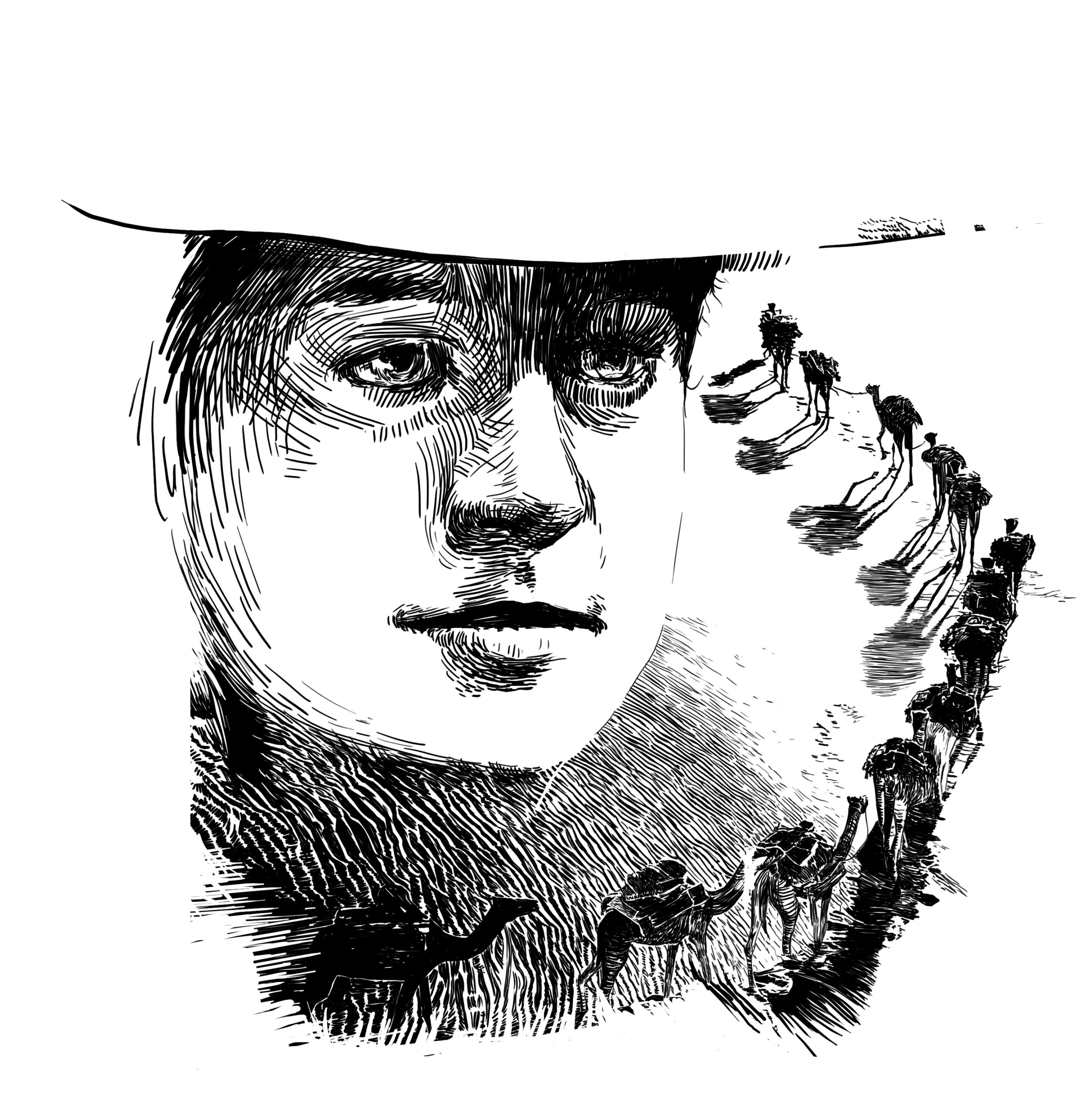
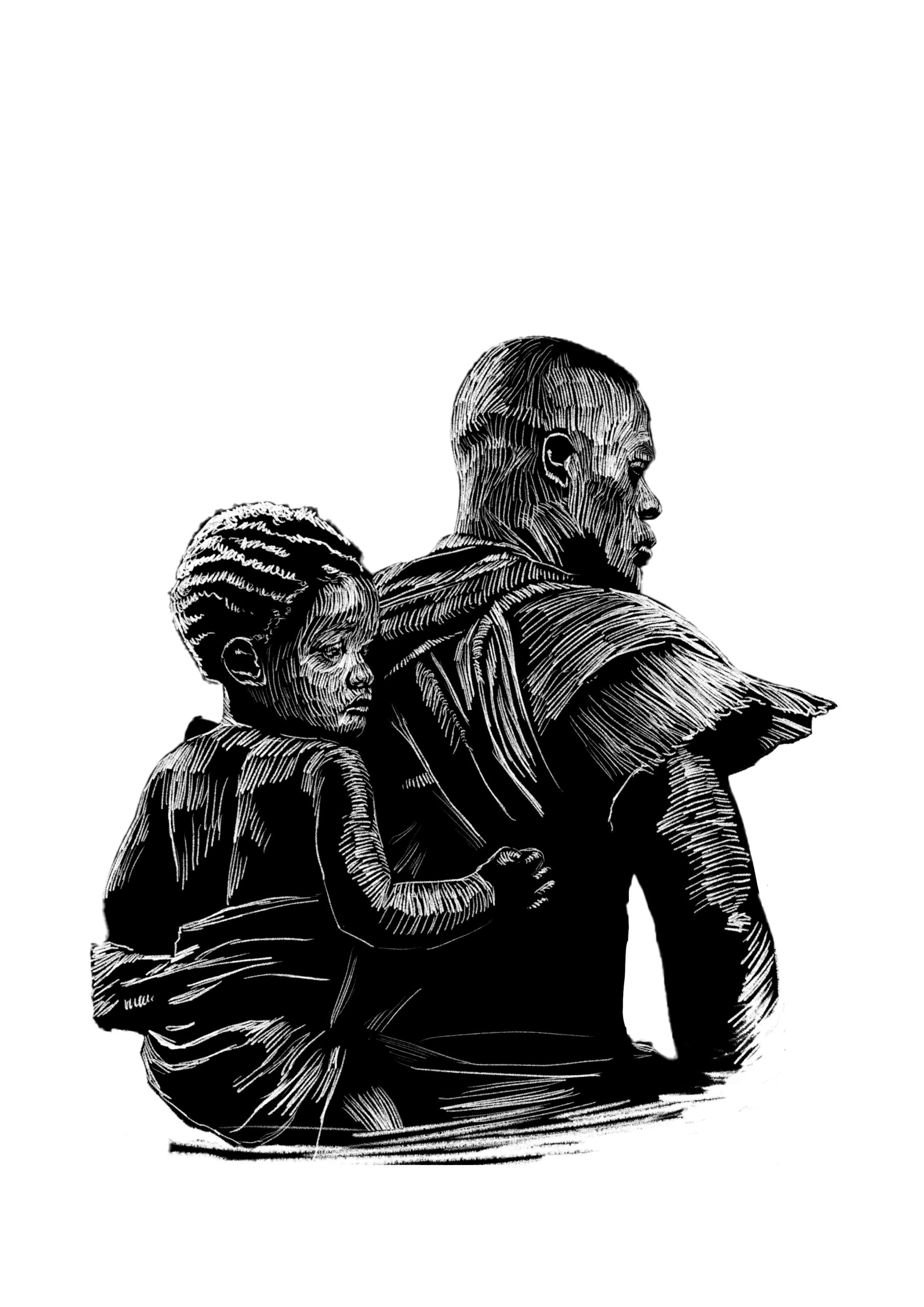
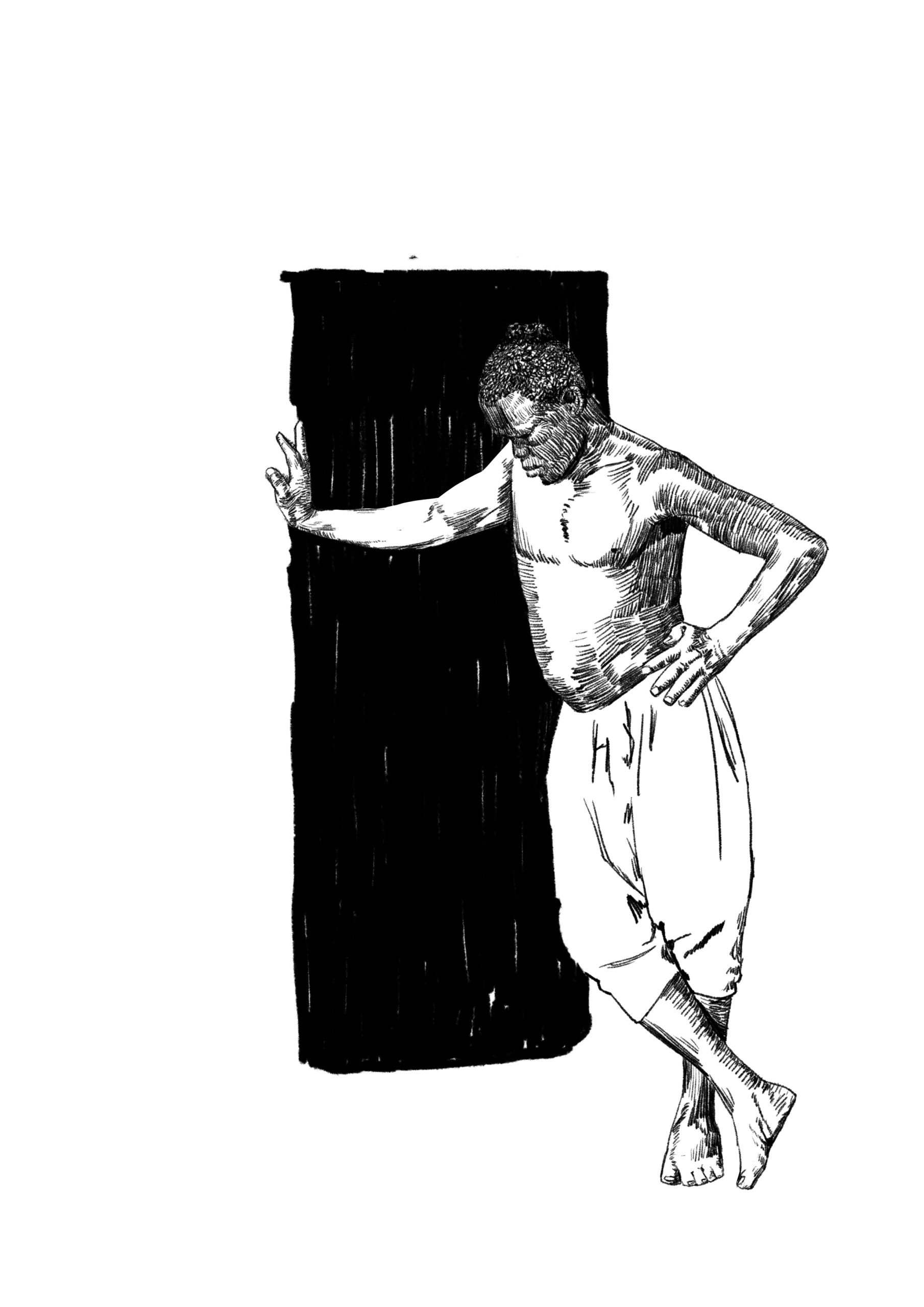
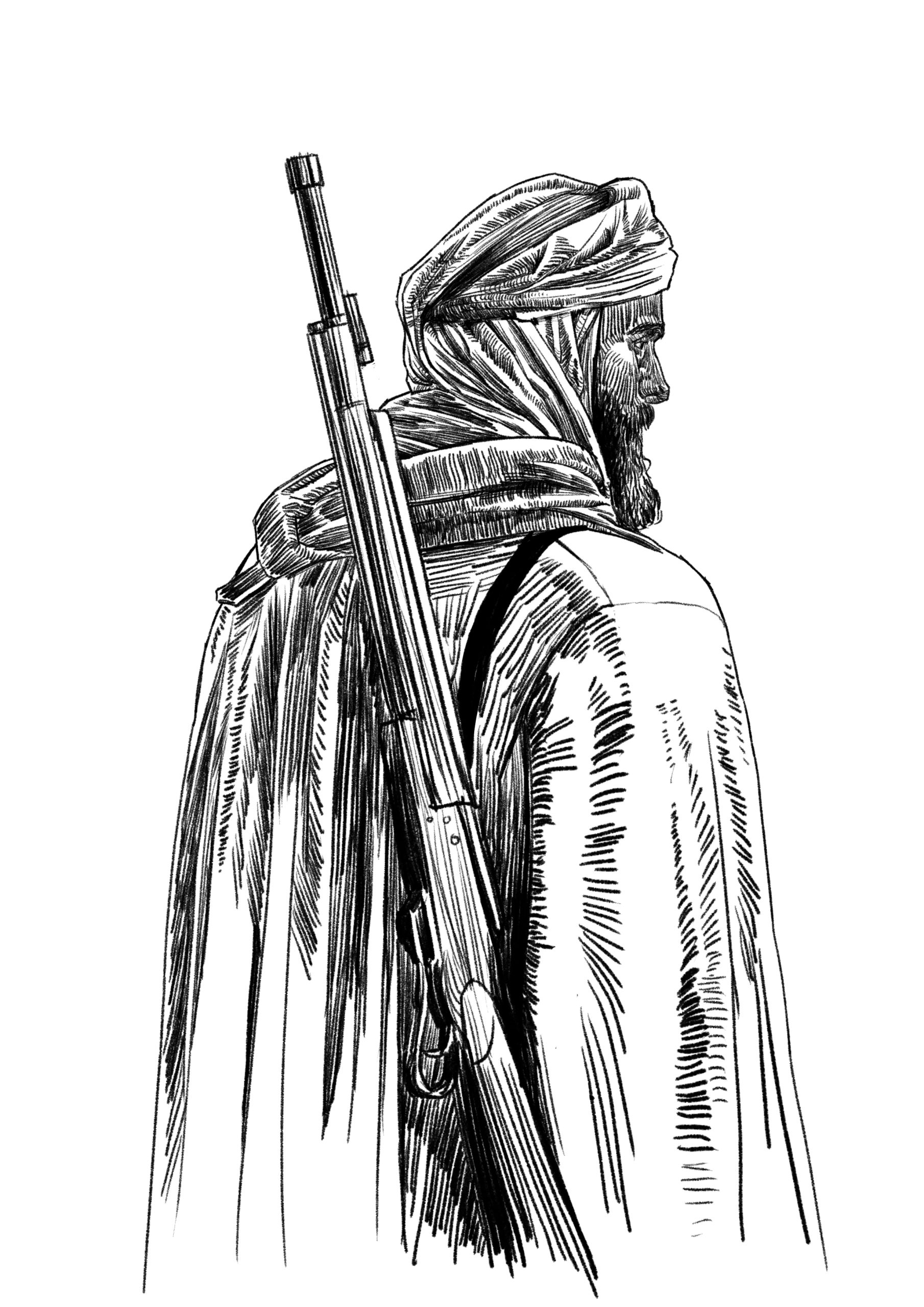
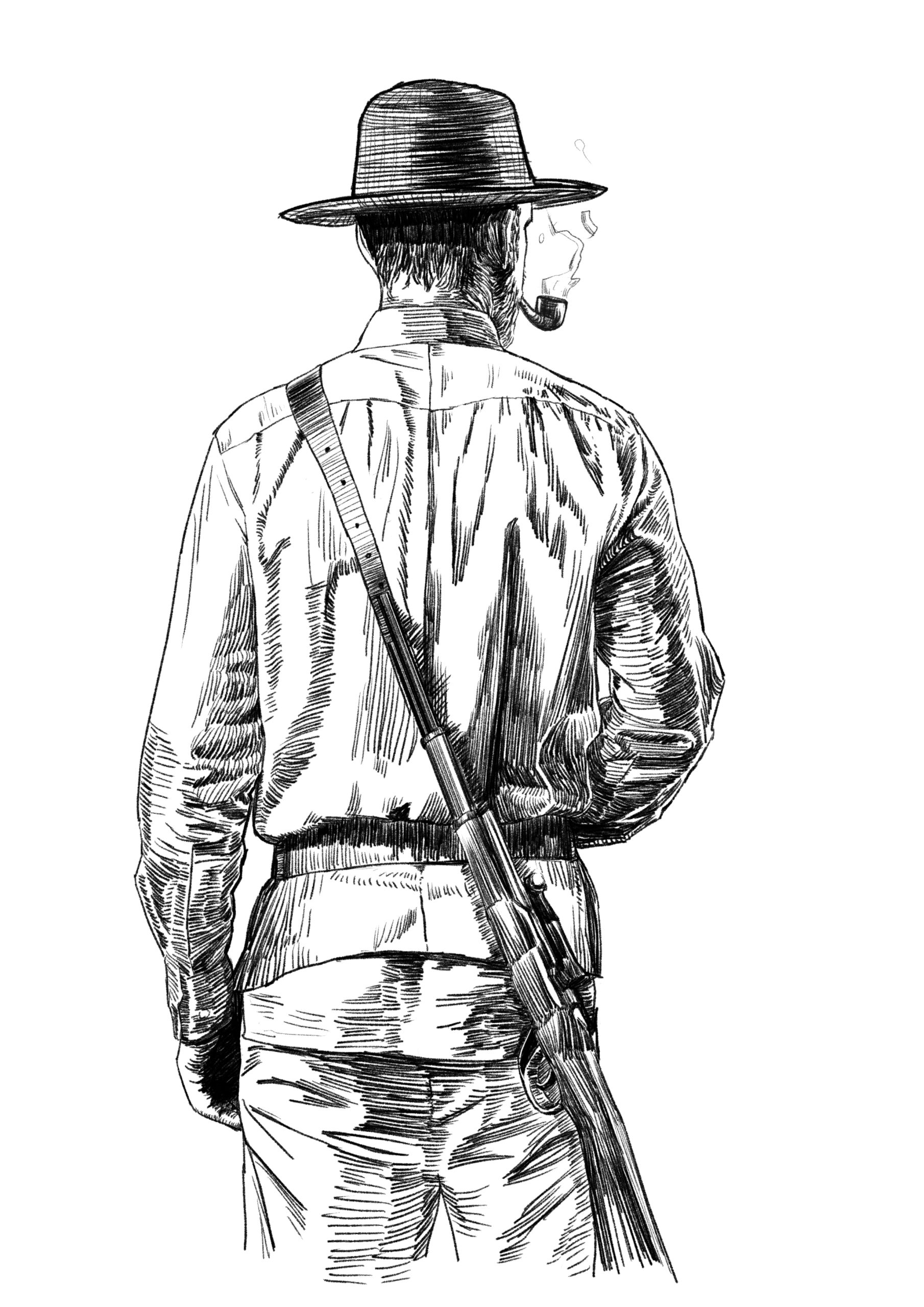
Regarding the final section, the sculpture section, artist Shefa Salem added two creative works from her output in the field of sculpture.
- The first sculpture, titled “On a Bed of Eternal Stones”, deals with the burial rituals of ancient Libyans and the funerary style regarding the positioning of the deceased and their belongings. It highlights the recognized social behavior to ensure the smooth transition of the deceased to the other world to preserve their soul.
- The second sculpture, titled “Life and Death”, addresses the importance of the jackal as a mythical animal due to its relationship with life and death in Libyan rock art, in addition to its social function alongside the rhinoceros in prehistoric times for rituals, ceremonial occasions, dance, and birth.


In the Ethno Libya exhibition, poetry, prose, literature, and scientific and historical studies within the context of interdisciplinary text played a role in this convergence with visual art and sculpture, aiming to transform text into a visual extension. Thus, the painting, the print, and the sculpture become a self-contained text, open to re-reading, contemplation, and interpretation. This offers the recipient a multi-sensory experience exploring the relationship between image and word, and between imagination and collective memory, in a single artistic form of intertwined voices and meanings.
Share now: