
Qulaib
Boundlessly, the void stretches around it. In the heart of free space, **Al-Qulaib** rises as if it were the final destination of all wandering, where tombs rehearse the rituals of the sun and passage. That mountain which guards nothing and awaits no one. It is not so much high as it is steadfast—the steadfastness of one who knows all movement revolves in the depths of silent sovereignty.Every fissure in it represents a line from the ancestors’ ecstasy in the dream of water, and every color that shifts with the light at dawn leans toward ash. At noon, it ignites with a parched yellowness, only to return at evening to rest in a desolate blueness, as if time were a hidden pulse like an idea the earth forgot—a bewitching idea suddenly remembered by all who stand in awe before it.
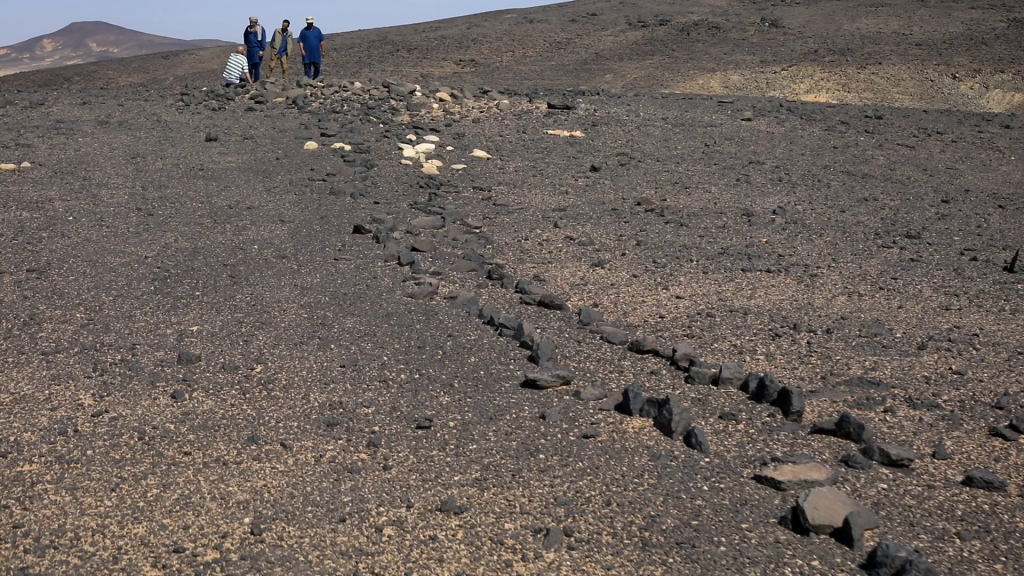
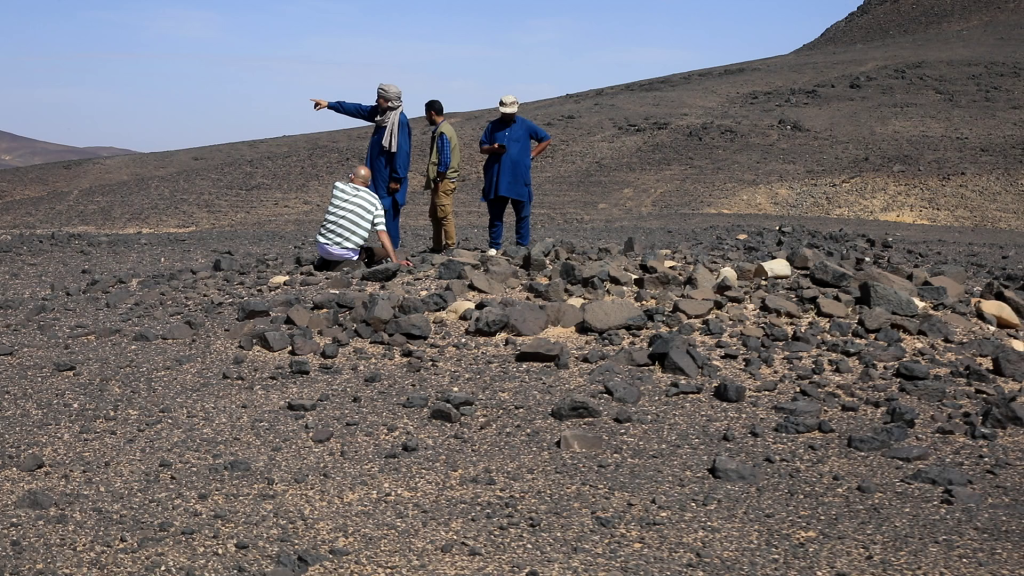
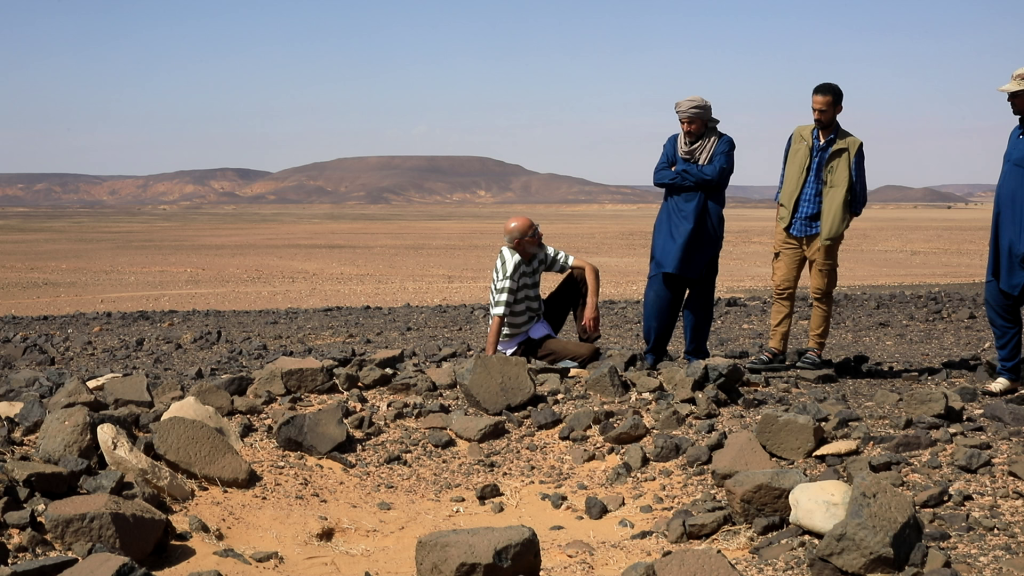
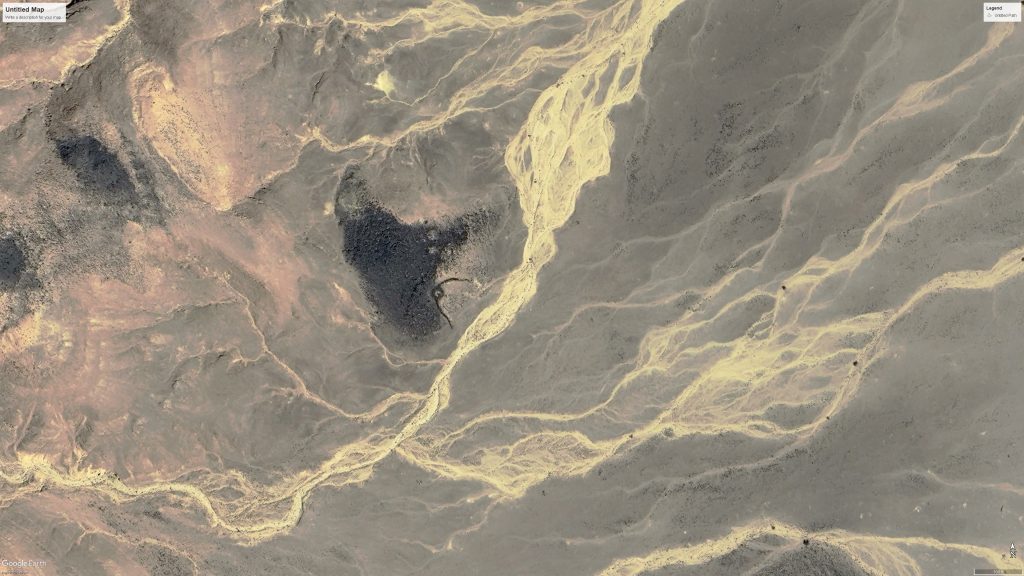
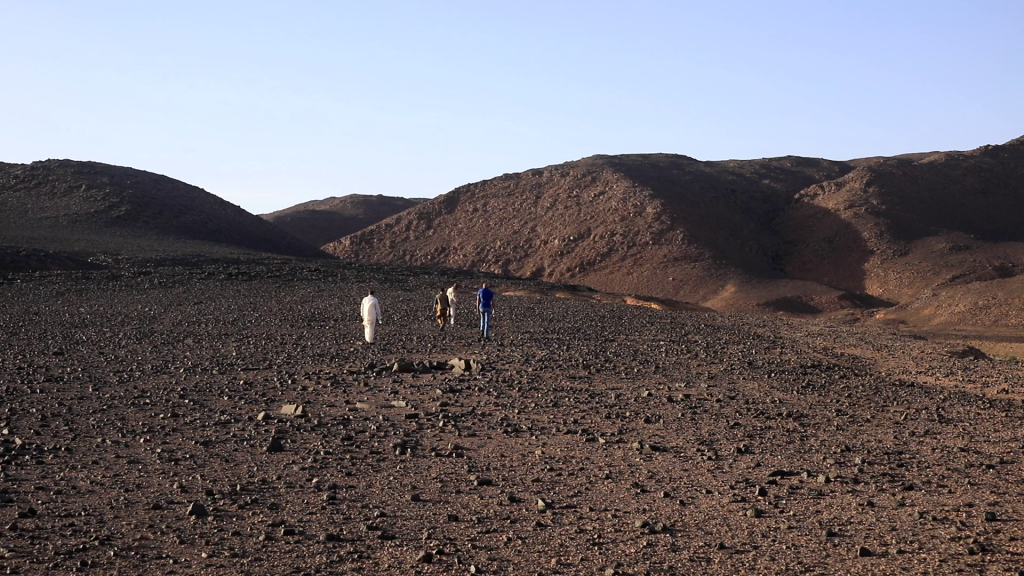
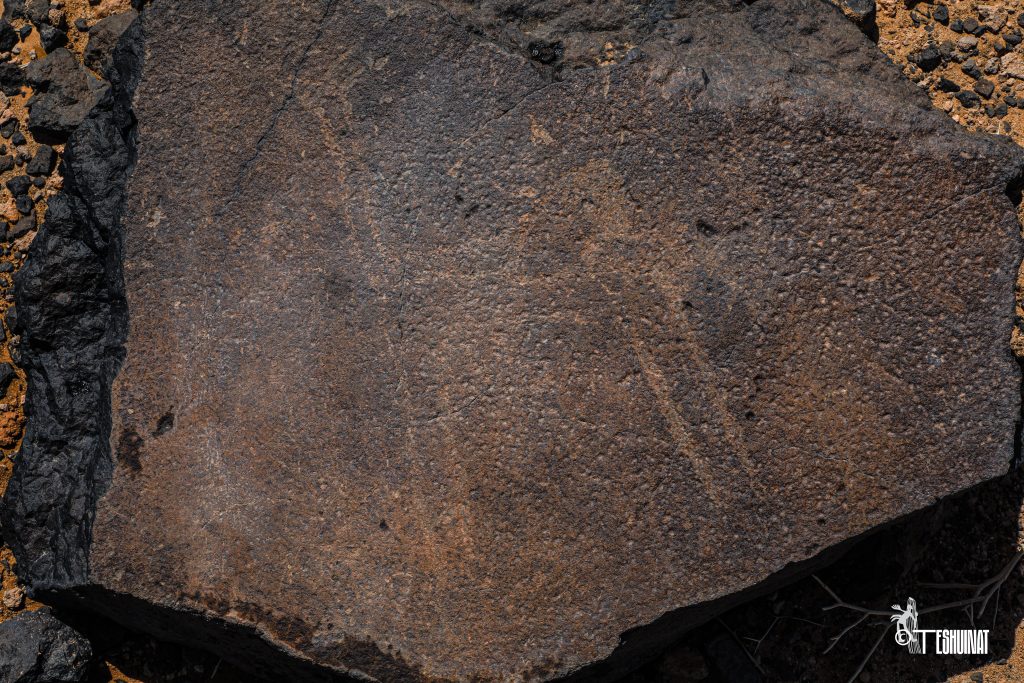
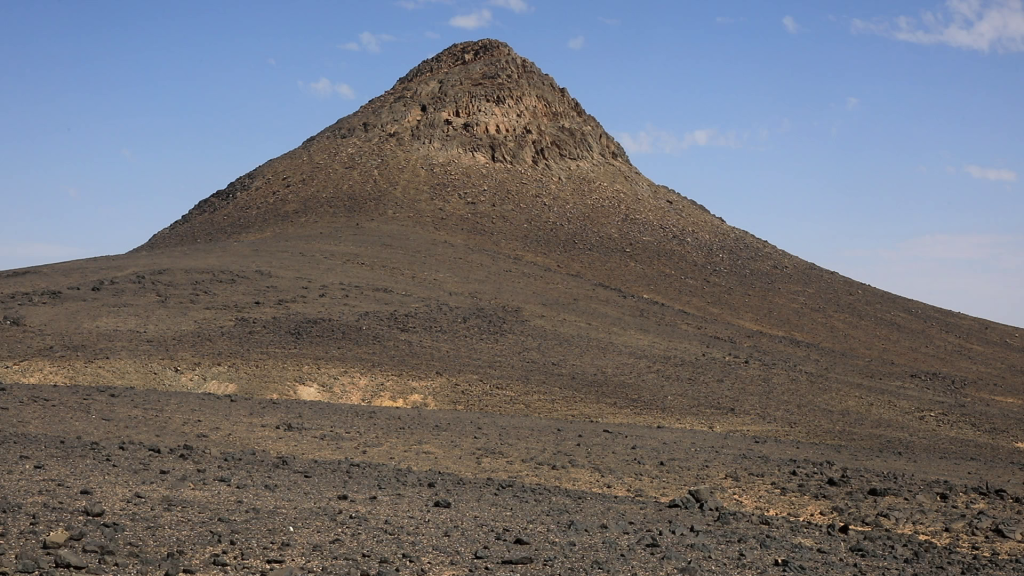
Photograghs taken by Essam elsabri.
Al-Qulaib (Qulaib Farjan)
It is a conical-shaped mountain, formed by the emergence of volcanic magma during the formation of the surrounding mountains. It lies in the center of a vast expanse that gathers several valleys and mountain reefs, standing as a landmark of the region—as if awaiting the arrival of the waters of Wadi Zaqqar to merge them with the waters of the wadis of Sultan, Wilyan, and Anqibu, sending them all together northward.
Its unique location makes it a guiding landmark for the people of the area, visible from tens of kilometers away. Beside it lies a royal tomb, astronomically oriented toward the east, indicating ancient astronomical and ritual practices associated with the sunrise.
It is worth noting that the local people historically named it “Qulaib”—a diminutive form of “heart” (qalb)—meaning it lies at the heart of the region, much like a heart. The term “Farjan” is the plural of “fareej—meaning a street or inhabited mountain reef. Notably, Wadi Farjan consists of a cluster of inhabited mountain reefs, each considered a fareej, collectively forming Farjan.